
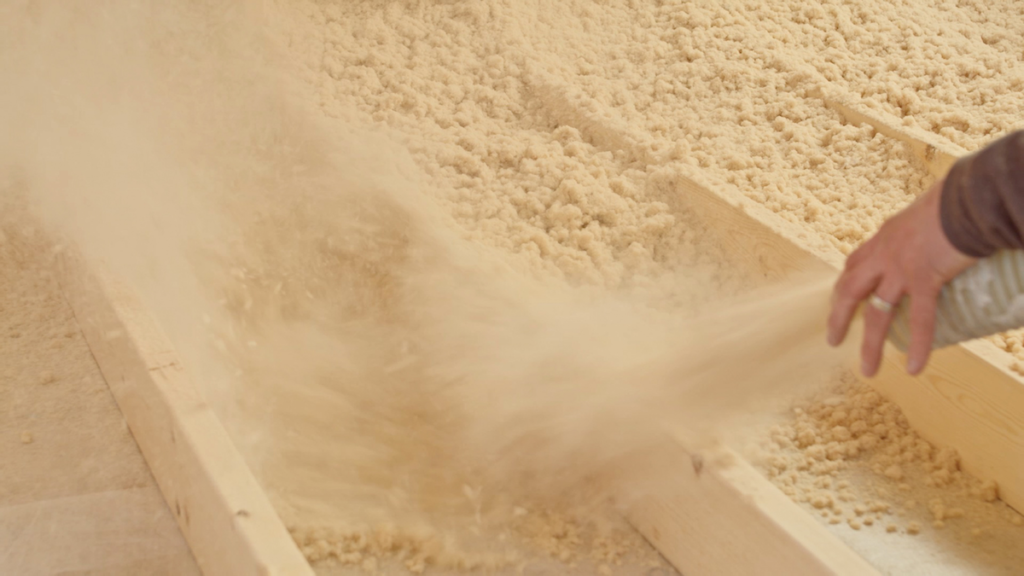
Loose fill Attic insulation being blown in to the rafters

Home improvement projects can come with a hefty price tag, especially when you factor in any professional labor needed for installation. However, these investments have the potential to yield significant long-term savings and enhance the overall value of your property. But how do you weigh these possible benefits when faced with decisions about which home improvements to tackle, and how?

With more than half of our home’s total energy consumption going to heating and cooling, improvements that reduce these expenditures can substantially affect your annual cost of living. This article will lay out both the costs and potential savings of one of the most effective ways to reduce energy consumption: insulating your attic. We’ll break down not only the long-term benefits of attic insulation but also the different types of attic insulation materials, their respective cost estimates, value, and installation needs.

Attic Insulation: Forgotten or Feeble

As New England natives, where old homes are abundant, we’re not surprised to find a house lacking attic insulation or with a less than optimal insulation type and distribution. But the Northeast isn’t alone in this. Across the country, attics are often a forgotten or inadequately insulated element of residential buildings. There are many reasons why this is often the case:

  • Historical Construction Practices: You’ll often find attic insulation absent from older homes due to historical design and lack of awareness around the benefits of insulating your attic. In the past, energy efficiency wasn’t a primary concern and insulation materials were less readily available or affordable than they are today.
  • Limited Access: Attics can sometimes be difficult to access making installation more challenging. If attic insulation wasn’t installed when the house was built, homeowners may feel insulating is more work than it’s worth.
  • Regional Climate: Homes in warmer climates with milder winters may have uninsulated attics because the perceived need for insulation is less pronounced.
  • Building Codes: Requirements for insulation differ from one region to another or may only apply to new construction and major renovations.

General awareness is also a barrier to insulating your attic. Without understanding the benefits, homeowners might avoid the upfront cost of insulating this little used space.

Savings & Benefits of Attic Insulation

When you think of insulation, you probably think about keeping heat inside your home, like wearing a puffy down jacket on a cold winter day. But many don’t realize that your insulation can impact more than just your home’s temperature. Insulation plays a role in moisture levels, air quality, and even heat diffusion in hot weather. This applies to insulation throughout your home, but these effects can be felt even more keenly in your attic, which is closest to exposure to the sun, weather and rising humid air from within the structure.

Energy Cost Savings

Properly insulating your attic can help maintain consistent indoor temperatures. That means it helps to keep your home warm on cold days and cool on hot days. This reduces the workload on your home’s heating and cooling systems, which can result in substantial energy cost savings. In fact, according to the U.S. Department of Energy, adequate insulation can save homeowners up to 15% on heating and cooling.

Environmental Impact

Reduced energy consumption also translates to a lower carbon footprint and a more environmentally responsible home. With a lower need to use your gas, propane, fuel oil or electric heating and cooling systems, fewer greenhouse gases like carbon dioxide, sulfur oxide and nitrogen oxide are released into the air. The overall environmental impact will depend on the types of attic insulation materials you choose for your home, but energy savings essentially go hand in hand with ecological benefits.

Increased Property Value

Upgraded attic insulation adds value to your home, making it more attractive to potential buyers if you’re thinking of selling. This can be a crucial selling point for regions with more extreme seasons. In 2022, the National Association of Realtors estimated that insulation upgrade projects have a 100% cost recovery and are a great marketing point for increasingly climate-conscious buyers.

Regulating Moisture in Your Home

Attic insulation also plays a vital role in controlling your home’s humidity levels. Properly insulated attics help maintain balanced indoor humidity, which can have multiple benefits. When humidity levels are excessively high, it can lead to condensation on surfaces, including ceilings and walls. Over time, this condensation can cause water damage, like peeling paint, stains, and even structural issues. The proper insulation will allow excess moisture to escape your home, protecting your structure from damage. This vapor diffusion and specific ingredients added to your insulation material can also mitigate the growth of mold and mildew, helping you maintain healthier indoor air quality.

Understanding Different Types of Attic Insulation

Depending on the size, accessibility and final use of your attic space, batt and blow in attic insulation are most common. Batt allows you to insulate between rafters and is an excellent option for homeowners who want to transform their attic into a functional storage or living space. Blow in attic insulation is an effective method for achieving even coverage in hard-to-reach places but requires professional tools and installation experts.

There are also multiple types of attic insulation materials with varying costs, benefits, environmental impact, and attic insulation R value. Let’s review the four types of attic insulation that are most common.

Fiberglass

Loose-fill fiberglass insulation is made from molten glass spun or blown into fibers. Though some fiberglass is manufactured from recycled glass, most is made from sand. It is noncombustible, will not rot or absorb moisture and does not support the growth of mold and mildew. However, fiberglass is known to be a skin and lung irritant, posing hazards to your family. It’s also not an effective pest preventative and can become the home to rodents, insects and more. All insulation can be a home for rodents if we’re being honest. Fiberglass isn’t biodegradable, making it durable in your home but leaving it in a landfill when disposed of. 

Mineral Wool

Mineral wool or rock wool is made from stone or slag heated to a high temperature and spun into fibers. Its feedstock is often the industrial waste from the steel industry that would otherwise have no use. Mineral wool has many of the same properties as fiberglass, including potential irritation to the skin and lungs and its inability to biodegrade once disposed. It has the added benefit of increased sound-deadening, making your home quieter and more comfortable. Though boards and batts are common, it is harder to find in loose-fill form.

Cellulose

This paper-based blow in attic insulation can be made from any cellular plant source like corncobs or sisal but is mostly commonly made from recycled newspapers, cardboard, office paper, and other everyday wastepaper products. While this makes it more eco-friendly and biodegradable than its glass and mineral counterparts, less paper is being manufactured and recycled as our world becomes increasingly digital. It’s relatively inexpensive but can settle over time, resulting in pockets that transmit hot or cold air into the home. Cellulose can also take a long time to dry if it becomes wet, reducing the attic insulation R value and leading to the formation of mold and mildew.

Wood Fiber

New to the American insulation market, wood fiber insulation is made from woodchips discarded by lumber and sawmills, giving it a consistent, renewable, eco-friendly feedstock. The fibers are treated with borate and baked to eliminate the potential for off-gassing, giving wood fiber insulation the benefit of mold, and fire resistance without the risks to human health. Borate is added to building products to deter pests and insects.  It arrives at your job site already carbon-negative, making it the most sustainable option for attic insulation. It is vapor-open to manage indoor humidity, offers industry-leading acoustic performance, and features interlocking fibers that are resistant to slumping over time.

Cost of Attic Insulation

Of course, the cost of insulating your attic will depend on the material you choose, but homeowners can expect to pay between $0.30 and $2.50 per square foot. Because blow in attic insulation requires expert installation, labor costs should also be considered. Although this varies from community to community, contractors usually charge $0.50 to $2.75 per square foot. In total, that makes the average cost of attic insulation about $3.00 per square foot.

How to Perform a Cost Benefit Analysis on Attic Insulation

To better understand how the insulating of your attic would impact your finances, you can perform a quick cost-benefit analysis (CBA) using the averages above. Start by measuring your attic space to determine its square footage. If your attic is inaccessible, you can estimate it using the square footage of your topmost living space floor. Then, multiply that total area by the average $3.00 cost for insulation materials and installation.

Total Attic Sq. ft x $3.00 = Average Cost of Attic Insulation

We already know from the National Association of Realtors that this cost is immediately recouped in added value to your property. But to determine the ongoing savings of insulating your attic, you’ll need some info on your home’s current energy costs. It’s best to use an average from across a calendar year to account for seasonal changes but if you don’t have this data on hand, you can use your most recent monthly energy bill instead. Multiply your monthly energy cost by .15 to determine how much you would save with proper attic insulation. You can multiply this result by 12 to know your annual energy savings.

Average Monthly Energy Cost x .15 = Monthly Savings from Insulation

Investing in attic insulation is a strategic decision that can lead to significant long-term savings, improved comfort, and increased property value. By understanding the various insulation blow in attic insulation options and considering factors like material costs, installation expenses, and long-term benefits, you can make informed choices tailored to your needs and budget. Whether you prioritize energy efficiency, environmental responsibility, or simply a more comfortable and healthier home, the right attic insulation can help you achieve your goals and enjoy the rewards for years to come. And if you need more help understanding how to make your home project budget most effective, reach out to our team of building science experts for their advice on attic insulation and more.

In the realm of home safety, lead paint and asbestos have long been recognized as health hazards. However, there’s a myriad of other factors that can significantly impact our homes’ indoor air quality. Many homeowners remain unaware of the various elements influencing indoor air quality, which can have profound effects on the health and wellbeing of occupants. This article aims to shed light on these often-overlooked factors and indoor air pollutants, offering valuable insights and practical tips for homeowners to improve indoor air quality. From managing moisture levels to making informed paint and building material choices, we’ll explore ways to assess, enhance, and sustain a healthier living environment for you and your family.

Understanding Indoor Air Pollutants

Our homes are our safe havens, places of rest and rejuvenation. And now more than ever, they are also our places of work. According to the EPA, Americans spend 90% of their time indoors a percentage that is even greater for people who are most susceptible to pollutants like young children, the immunocompromised, and our elderly. Yet we don’t often give much thought to measuring indoor air quality or how it affects our health. In fact, our indoor spaces can have 2 to 5 times higher concentrations of certain pollutants than the outdoors. Most indoor air pollutants come from sources within the buildings themselves, such as:

  1. Combustion Sources: Combustion of any type, from smoking, wood or coal heating, cooking appliances, and fireplaces can release harmful byproducts such as carbon monoxide and particulate matter directly into the indoor environment.
  2. Moisture Levels and Ventilation: Excessive moisture levels within your home can lead to mold and mildew growth, a major contributor to poor indoor air quality. Poor ventilation exacerbates this issue by trapping moisture and contaminants indoors. Monitoring indoor humidity levels and implementing proper ventilation systems can significantly mitigate these concerns.
  3. Paint Choices and VOCs: Volatile Organic Compounds (VOCs) are emitted by various household products, including paints and finishes. These chemicals can lead to respiratory issues and other health problems. Opting for low-VOC or zero-VOC paints when redecorating can greatly reduce indoor air pollutants.
  4. Insulation and Building Materials: Insulation materials play a crucial role in maintaining indoor temperatures, moisture, and air quality. Traditional insulation materials, such as fiberglass, can release airborne particles that may affect respiratory health. Closed cell foam insulation can restrict the flow of air and trap moisture, leading to mold and mildew.

All of the above can have negative health effects both daily—irritation of eyes, nose, and throat, headaches, dizziness, and fatigue—and in the long term—worsening of existing respiratory conditions such as asthma and chronic obstructive pulmonary disease, and higher risk of developing various cancers. To protect the health of our families, we need to be stewards of our indoor climate just as we aim to be of our global climate. This starts by identifying what causes indoor air pollution in your home.

Measuring Indoor Air Quality

Assessing the air quality within your home is the first step toward improvement. There are some signs of indoor air pollutants that are easy to spot, like condensation around your hot water heater, damp floors or walls in your basement and attic, discoloration or warps in your walls and ceiling and musty odors. If you know the brand and type of paint used to decorate your home, you can research their VOC content online.

Home air quality testing kits are also readily available and can identify pollutants like mold spores, allergens, and VOCs. These kits provide a baseline understanding of your indoor air quality and highlight areas that require attention.

For a more comprehensive evaluation, consider enlisting the services of indoor air quality professionals. They can perform thorough assessments, pinpointing potential sources of contamination and suggesting indoor air quality solutions tailored to your home and needs.

Improving Indoor Air Quality

The most effective way to improve indoor air quality and protect your home’s inhabitants from adverse health effects is to eliminate sources of pollution or reduce their emissions. Some of these indoor air quality solutions can be done by the homeowner while others may require professional help.

Maintain Proper Ventilation

Adequate ventilation is essential for minimizing moisture buildup, maintaining a steady flow of fresh air and expelling byproducts of cooking or heating.

Most home heating and cooling systems do not bring fresh air into the home. Regularly open windows, turn on ceiling fans, and use exhaust fans in areas prone to humidity, such as bathrooms and kitchens to reduce moisture and increase outdoor air exchange. It’s especially important to increase ventilation when doing activities that produce high levels of indoor air pollutants such as painting, cooking, sanding, welding, or other hobbies. You may need to install, update or clean HVAC systems above your stove or in your bathrooms to ensure your ventilation is working properly in the highest impact areas of your home.

Choose Low-VOC Paints

When repainting your home’s interior, select paints with low or zero VOC content. These options release fewer harmful chemicals into the air, improving indoor air quality and reducing health risks. With different green labels bedecking paint aisles, it can be difficult to pick the right product to keep your home safe. Greenguard is a widely trusted label that tests for VOC emission levels and offers a range of certifications. Look for their gold certification as a safety indicator under the most rigorous qualifications and use their website to search for low emissions products.

Upgrade Your Insulation

Consider upgrading your home’s insulation with vapor open options like wood fiber insulation. All of TimberHP’s wood fiber products are both highly permeable and water resistant. TimberBoard repels water that might get past the siding from the outside as a continuous insulation and will redistribute that water quickly, so the assembly dries quickly and stays protected. Moisture in wall cavities can occur from air leaks in a home creating risky condensation that can support mold growth or eventually water damage. TimberFill and TimberBatt’s higher density reduces the chance for that air to enter the cavity in the first place but if it does get in it absorbs and redistributes that moisture helping everything to dry.  Unlike other insulation options that contain harmful particulate, wood fiber insulation can also be cut, handled, and installed without gloves, long sleeves, or chemical respirators. Not only does it contribute to a healthier indoor environment, but it also supports sustainable forestry practices.

Control Humidity

Use dehumidifiers to control indoor humidity levels, particularly in damp areas like basements. Keeping humidity within the recommended range (around 30-50%) helps prevent mold growth and allergen accumulation. If your home is prone to moisture or subject to heavy rainfall and snow, consider working with basement contractors to install vapor barriers and sump pumps in your basement and crawl space.

Practice Regular Cleaning and Maintenance

Regular cleaning, vacuuming, and dusting helps minimize the accumulation of allergens and particles in your home. Carpet and upholstery can also be breeding grounds for mold and mildew so regular cleaning is especially important for these items. Use high-efficiency particulate air (HEPA) filters in vacuums and consider adding an air purifier to your home to capture even the smallest pollutants. Don’t forget to regularly change these filters so they remain effective in improving indoor air quality.

Sustaining a Healthy Living Environment

Indoor air quality is not a one-time concern. Continuously monitor humidity levels, inspect for mold growth, and conduct periodic air quality tests to ensure that your efforts are yielding positive results. Share your knowledge about indoor air quality with your family members and neighbors. Encourage them to adopt habits that contribute to a healthier living environment, such as keeping windows open for ventilation and using eco-friendly cleaning products. And stay updated on advancements in insulation technology, ventilation systems, and other sustainable building practices that influence indoor air quality. As new solutions emerge, consider incorporating them into your home for continuous improvement.

By understanding the nuances of indoor air quality and taking proactive steps to improve it, you can create a safer and healthier living environment for yourself and your loved ones. From moisture management to insulation choices, your actions today can safeguard the wellbeing of your home’s inhabitants for years to come.

TimberHP welcomed a crowd of 350 to its mill in Madison on Friday to mark the successful startup and operation of its first wood fiber construction insulation production line in a former paper mill shuttered in 2016. The line manufactures TimberFill, a loose fill insulation for attics, wall cavities, floors, and ceilings. Two more lines, making the company’s TimberBatt and TimberBoard products, will be operational by year’s end.

Governor Janet Mills, Senator Susan Collins, Congressman Jared Golden, Assistant to the President and National Climate Advisor Ali Zaid and Brian Brashaw with the USDA Forest Service joined TimberHP co-founders Joshua Henry and Matthew O’Malia in delivering remarks to a crowd of 350 TimberHP staff and investors, state and local supporters, and friends.

Wood-fiber insulation is a renewable, high-performing, sustainable building product that reduces greenhouse gas emissions through its ability to store carbon and reduce energy loss in the built environment.

“I believe our strongest motivation in life is to do something that matters,” said TimberHP co-founder and CEO Joshua Henry. “And what we’re celebrating here today—a renovated mill, making renewable, nontoxic, carbon-storing insulation products—matters. Hiring talented local people—and paying them well to master a new wood products manufacturing process—that matters too. A lot.”

TimberHP already employs nearly 70 people in Madison. Startup of the TimberFill line comes after more than a year of renovation work inside the mill by Cianbro Corporation—a $150m construction project to prepare the facility for wood fiber insulation manufacturing.

“My Administration has been proud to partner with TimberHP to bring manufacturing back to Madison. Today, Maine becomes home to North America’s first manufacturer of wood fiber insulation – an historic achievement that will strengthen our economy and send the unmistakable message that Maine is on the cutting-edge of innovation,” said Governor Janet Mills. “This extraordinary milestone is an example of how public-private collaboration can create good-paying jobs, advance our clean energy goals, and bring new life to our old mills. I congratulate TimberHP and the people of Madison on this accomplishment.”

All three TimberHP insulations—TimberFill, TimberBatt and TimberBoard—are true byproducts of Maine’s existing forestry sector, made from softwood chips—the residuals from milling lumber—and from low-value pulpwood removed from stands of timber throughout the state to improve forest health.

“Coming from a six-generation forest-products family, I know there is no other industry that requires more respect for the past and faith in the future,” said US Senator Susan Collins. “The possibilities are endless when new technology is combined with Maine’s traditional values of hard work and ingenuity.  Congratulations on this great accomplishment, and I look forward to our continued work together.”

When the Madison mill closed in 2016, more than 200 people lost their jobs. The impact of the shutdown, though, reverberated out, hurting loggers, truck drivers, Madison’s tax base and the business owners in the town and beyond. Over the next few years, the TimberHP team is expected to grow to as many as 140 employees. Among the company’s core group are several longtime veterans of UPM paper who returned to the mill to help revitalize it.

“What I see here is so much more than a business making a new kind of insulation. It’s a mill that was once shuttered and empty now back in production,” said Congressman Jared Golden (ME-02). “A business headquartered in Maine—majority owned by Mainers, 100% American-owned—using Maine wood, cut by Maine loggers, hauled by Maine drivers, to make a product in Maine, by Mainers—for Mainers, lowering the cost of heating their homes and businesses. The wood fiber that comes to this mill will not go to Canada or China to support jobs in those places but instead creates jobs here. The product you make here may someday be exported to them, instead of the other way around.”

A diverse coalition of largely Maine-based investors helped TimberHP raise enough equity to sell an $85m solid waste and recycling green bond to finance buildout of the facility. In TimberHP’s early days, the company relied on state and federal grants and loans to get the business off the ground. One program that was especially helpful early on was the USDA Forest Service’s Wood Innovations Grant program. TimberHP has received three separate grants through Wood Innovations, the most recent just last month for $1.5m.

“The Forest Service is investing in markets for wood products and wood energy because they reduce wildfire risk, benefit our climate, promote sustainable forest management and spur economic development in rural communities,” said Jaelith Hall-Rivera, USDA Forest Service Deputy Chief for State, Private and Tribal Forestry

TimberHP wood fiber insulation offers superior building envelope, thermal, and acoustic performance. A comprehensive, above-grade product line to create wind-tight, vapor-open assemblies offering stable, long-term R-values, improved temperature stability, and premium sound protection—priced for mainstream adoption.

By the end of 2023, TimberHP will be selling all three of its products, TimberFIll, TimberBatt and TimberBoard, into the U.S. market through its national network of distribution partners.

“Wood fiber insulation limits operational carbon emissions through energy savings, but also stores carbon when installed in a building,” said TimberHP co-founder Matt O’Malia. “It can be used in new construction. And even more importantly, as a retrofit solution for the 97 million square feet of commercial buildings and 244 billion square feet of housing stock that must be upgraded to effectively reduce building emissions. With our successful launch here in Madison, we believe we must scale TimberHP and manufacture our products in other parts of the country to offer these solutions in as many markets as possible.” TimberHP is actively looking at opportunities to scale its business and operate in other wood basket regions across the nation, especially those seeking outlets for wood waste.

Most fires that happen at home are the result of open flames such as candles, smoldering cigarettes, electrical arcs or faulty appliances. Domestic heat sources and exhausts, including chimneys, are another large contributor.  

It’s important to install smoke detectors on every floor of a buildings and test them monthly. It is good to have a plan for escape and review annually. Research shows that while homes today are less likely to burn, thanks to improved fire safety codes driving better methods and practices, they burn faster and hotter than they did 40 years ago, leaving less time to get out safely.  These faster and hotter fires result from the number of synthetic materials we have added to our homes over the years.  Furniture and finishes are a big contributor, as are building materials. 

Building and fire codes exist to make sure our houses are as safe as they can be and to provide critical time to escape. When a fire is beyond control in your home, the most important thing to do is to get to safety as fast as possible.  Believe it or not, the insulation materials in your walls play a key role in determining how slowly or quickly a fire escalates. 

Our TimberFill and TimberBatt products are treated with borates, giving them Class A fire ratingsThese materials not only insulate well but also allow walls to withstand fire for one or even two hours.

TimberBoard, our continuous insulation, achieves a Class B fire rating on its own, without any treatment. It resists flame like a superhero’s shield, charring on the surface and reducing temperature rise to other non-treated parts of the building like the framing.  Wood is a strong, sustainable part of many of the homes we build today. TimberHP’s vapor open, moisture resistant, fire rated assemblies deliver well insulated walls and the peace of mind and safety needed for modern, or not so modern, homes brought up to code. 

TimberHP Wood Fiber Insulation – made in America

When architect Matthew O’Malia started his Maine-based design-build firm in 2008, it didn’t take long for him to run into the construction problem that would lead to an unplanned career expansion into building products entrepreneurship.

Fossil-fuel derived insulations, the mainstays of the mainstream market, were itchy, scratchy, and prone to toxic off gassing. O’Malia’s construction crews couldn’t stand using them, and while they reduced operational energy use, their high embodied carbon levels canceled out those savings from a climate change perspective.

O’Malia and his business partner, materials chemist Dr. Joshua Henry, found a better solution in wood fiber insulation, a nearly $1B a year product in Europe. The entrepreneurs launched TimberHP—notes Architect Magazine—and are now making high performing, carbon negative wood fiber insulation—priced for mainstream adoption—for the first time in North America.

Installing TimberHP

After shivering in a tee shirt once (or maybe twice) most of us accepted our parents’ advice and layered up when the weather got cold. It is easy to appreciate the continuous insulation a sweater or blanket can provide. Here, in the lovely state of Maine, we respect and appreciate a building code that requires continuous insulation on our homes. In a climate like ours, adding this sweater or blanket to our buildings means increased comfort and reduced utility costs—two big reasons we get so excited about insulation! 

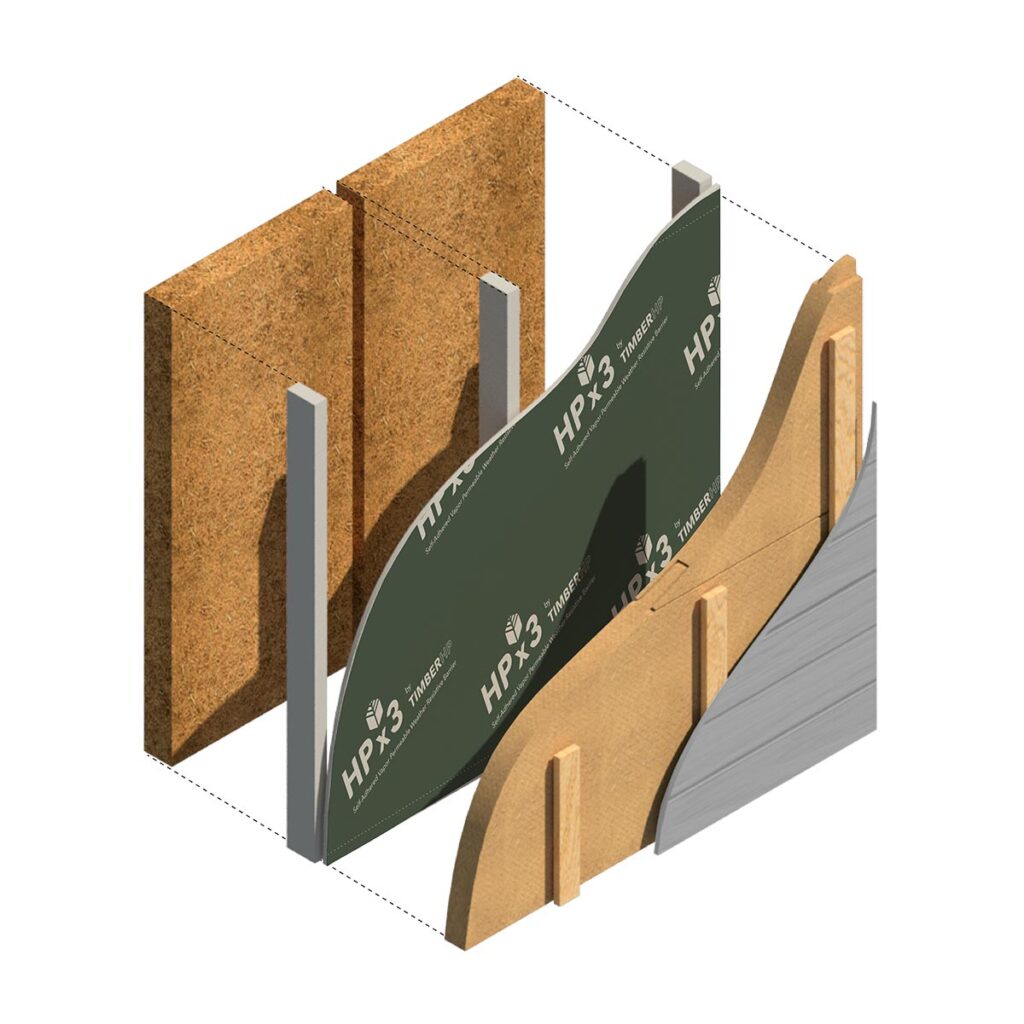
Why add continuous insulation? Most people understand insulation as the stuff that goes inside the wall. Filling wall cavities with insulation certainly makes a difference, but it is a little like stuffing your sweater between your ribs. Wood framing, the “ribs” of a house, can make up over 25% of the wall. Framing lumber has an R-value equivalent to about 1.25 per inch, less than a third of the R-value of cavity insulation like TimberFill or TimberBatt. If we only consider the framing and insulation parts of the wall (ignoring siding, air film layers, sheathing etc.), a wood framed 2×6 wall with R-21 insulation in the cavity performs at R-14. All that wood framing lowers the overall R-value but of course, we need framing to hold up the house! 

Wrapping our homes in a continuous insulation layer of R-5 improves both the framing and cavity R values, pushing the wall’s overall performance to R-20. For math geeks, this is a weighted average of U-values used to calculate parallel heat flow. The good folks at Residential Energy Dynamics here in Maine have a nifty tool to calculate this. 

Laboratory vs. Real-itory: In the lab, R-value, or resistance to heat flow, is calculated in a way that does not often match the real world. Heat moves by convection, conduction, and radiation and material R-values are calculated with all these dynamics at play. Once installed in the wild though, some cavity insulations perform better than others. A material’s density can reduce air flow, and in particular convection, within a wall cavity. Fiberglass is one product that just doesn’t live up to its lab tested expectations, as its loose, open fiber structure leads to convective looping in the cavity. TimberFill and TimberBatt install at a higher density, helping to limit this convection. 

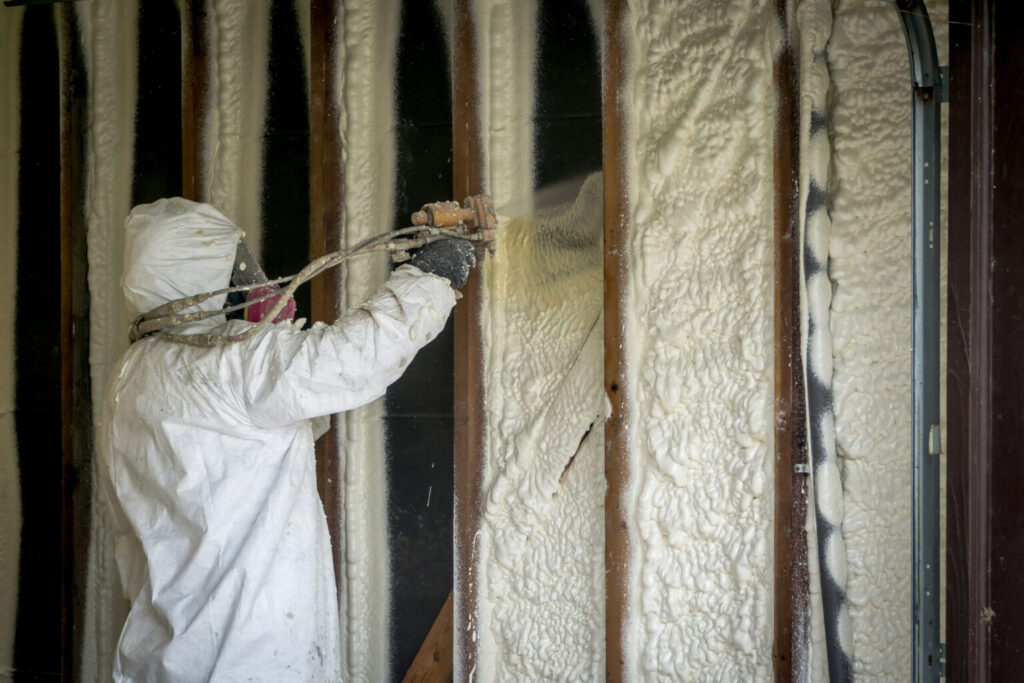
Closed cell spray foam, a higher R-value product, can also suffer from convective looping.  This is not because it is open and air flows through it. Foam can be an effective air barrier if it doesn’t shrink after installation. But it’s hard to trim, so often falls short of filling the entire cavity. If you can hit your R-value target in a 2×6 cavity with 3 or 4 inches of expensive foam, why pay for more? Well, not filling the cavity leaves a void, allowing cold air to slip in from the outside through those lower R-value studs, bypassing all that expensive spray foam!

Worker spraying closed cell spray foam insulation on a home
You may not be reaching your intended R-Values with cavity insulation alone.   

But wait there’s more: Adding continuous insulation on the exterior of the wall can do a few other important things. By reducing heat loss to the outside, it means convection is less likely to happen because the cavity and framing is kept warmer. This also reduces the potential for condensation.  We generate a lot of moisture in our homes and despite our best efforts at adding air and vapor control layers, sometimes moisture finds its way into walls. When it is cold outside, warm air can find a cool surface, like the back of the sheathing, and is essentially squeezed out of the air by reaching a dew point.

Installing TimberHP
TimberHP Wood Fiber Insulation – made in America

In colder climates, we can build more resilient walls with vapor open, continuous insulation like TimberBoard, paired with a good air control layer. Even if condensation does occur in a wall like this, it will escape. If you use foam board as continuous insulation, you reduce the potential for condensation, but can block vapor from escaping (it will find its way in) and risk trapping it against the sheathing. It also means you need to work harder to keep it out with vapor retarders and still not trap it at the same time if it gets past them.  

Detailing vapor management membranes on the inside is tricky. Electrical boxes, light switches and gaps at trim and baseboards and around windows are often not that tight. Air moves through them, carrying moisture. Give yourself a break, get comfortable, and power your house with TimberHP performance. It’s as easy as putting on a sweater!

In its latest issue, Residential Design magazine features an in-depth case study of OPAL Architecture’s “All-Wood, All the Time” home in Connecticut.

At the beginning of the piece, RD describes the origins of TimberHP co-founder Matt O’Malia’s move into manufacturing wood fiber insulation.

“While researching high-performance materials for their offerings, Matt became enamored of a wood fiber-based insulation made in Europe. With material scientist Joshua Henry, he founded GO LAB to pursue a means of making a similar product in Maine for distribution in North America. Just the bud of a compelling idea five years ago, this enterprise is now on the verge of full flower.”

wood fiber insulation building envelope exterior board cavity batt

Over the last 100 years, we have made our homes and buildings more energy efficient, resulting in increased comfort and improved indoor air quality (most of the time). We have also made them more complicated to build.  Progress, of course, often comes with some resistance. “Buildings need to breathe!” or “We’re making them too tight!” are two familiar concerns often voiced. Success in the creation of better performing building envelopes happens by focusing on control layers that manage water, air, moisture and thermal or heat.  Take care of these four principles and an efficient, lasting, comfortable, and durable building follows naturally!

Water: I have talked about how a good building envelope works like a breathable rain jacket—water resistant but vapor open. We, just like our buildings, can generate moisture from the inside of that jacket (envelope) and if it doesn’t escape, we end up wet just the same. Controlling water comes from combining well installed siding and roofing with hydrophobic and resilient insulation, like TimberBoard.

Airflow and Moisture: Holding onto the air we heat or cool keeps us comfortable and saves money.    Airflow can carry moisture. The airborne moisture (water vapor) we generate from cooking, breathing, showering and other activities needs to have a way to vent out of the building, or else it can condense in walls and roof cavities.  For years, we’ve designed and built ventilated roof assemblies to create cold roof decks and manage heat and humidity lost from conditioned space; but we’ve struggled to lock in on the best approach for wall assemblies.  What kind of wall do you need? These details in our new Roof and Wall Building Guide offer guidance. It’s also important to keep the wind out.  TimberBoard, our continuous exterior insulation, is windproof and plenty breathable, allowing moisture to leave the wall assembly without getting stuck and causing trouble.

Thermal Control: As you can guess, it’s all about insulation! You may find it strange that an insulation manufacturer lists thermal management last in this list, but an insulated building won’t do much good if all the other controls are not in place. Borates in our TimberFill and TimberBatt cavity insulations protect the wood fiber from mold and mildew (as well as insects and other pests). They also protect all that wood around the insulation, the structural sheathing and framing, from these threats. And they offer excellent R value at a great price!

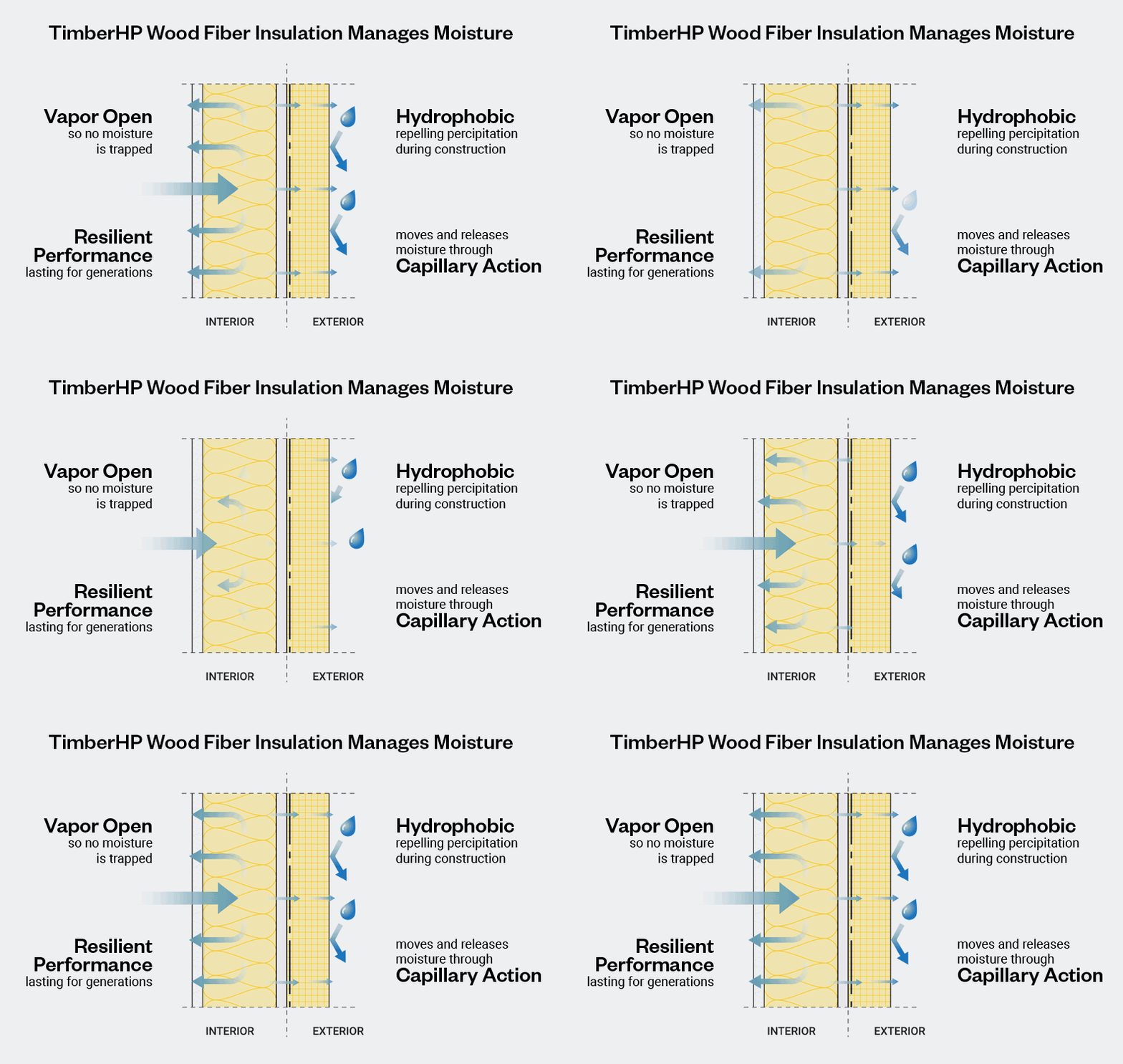
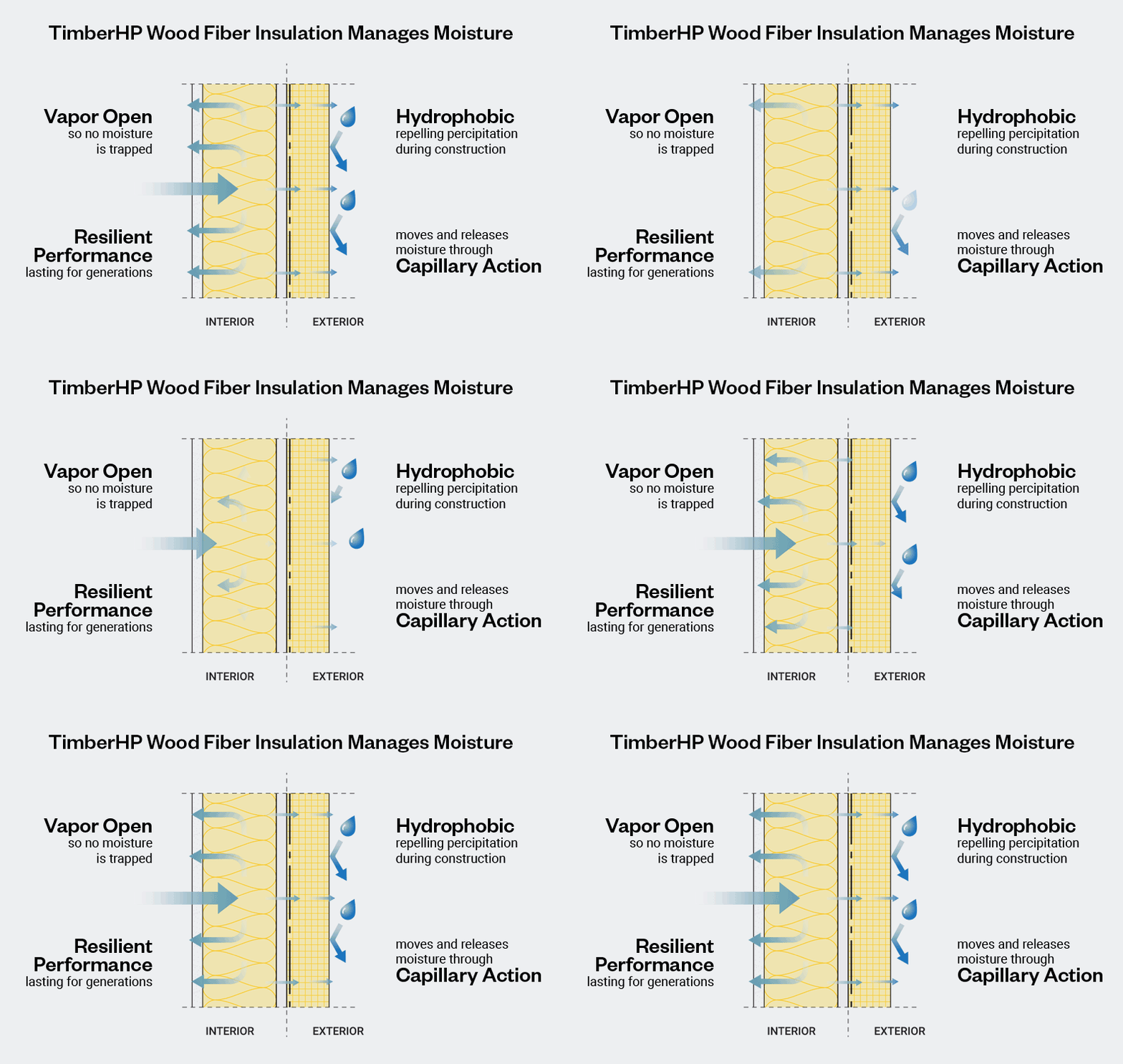
Stay in control with resilient and hydrophobic walls that are vapor open and control air flow.

TimberHP–Insulate Better. Live Better. TM

wood fiber insulation vapor open hydrophobic moisture

It might sound like we’re describing high performance “Gore-Tex” style rain apparel. What we’re really talking about is better-performing walls, the kind you would want for your home.  Ever spend time in an inexpensive plastic raincoat? It may keep the rain off you, but once you start moving, things heat up. It’s not the rain that soaks you, it’s your own perspiration.    It can get downright steamy when you wrap yourself in plastic!  

Moisture can cause all sorts of problems in construction and comes in many forms from driving rain to sleet and snow on exposed materials and structures.  It builds up on the inside too; we generate lots of humidity inside our homes from cooking, showering, exercising, and just living our lives. Either way, all that water and water vapor can be insidious, finding its way into places in walls and roofs, creating opportunities for condensation that can cause mold, mildew, and rot.  

Ideally, the walls of your home should work like a “Gore-Tex” jacket that keeps the weather out but allows built-up perspiration to escape when you are working or recreating.  

During construction, before the siding is installed, the hydrophobic (water-repellant) waxes and resins that make up our TimberBoard continuous insulation allow water to shed freely and quickly from the surface.  Our board can be left exposed to the elements for 3 months on roofs and 6 months on walls without UV or bulk moisture compromising the resilience of the product. Even if the board does get saturated, it will spread moisture out across the fiber and dry over time without failure.  Like a tree moves water up from roots, through its trunk to the branches and leaves, wood fiber manages moisture naturally.  The multiple forms moisture can take are no match for TimberBoard.  TimberBoard can hold up to 15% of its weight in water without losing R-value or insulating performance! 

The wax and binder combined with wood fiber provide a resilient covering (coat) for your home that functions on many levels. In fact, all our products are vapor open and manage moisture unlike other insulating solutions.  Our TimberBatt and TimberFill provide the R-value you need and still allow moisture to quickly dissipate and not build up.  We’ll dive in a little deeper in future posts, but for now, don’t sweat it!  Use TimberHP for walls that work. Water resistant, windproof, and breathable.      

wood fiber flame retardant

I suppose a cave could be considered a good place to live when it comes to fire safety.  It’s made of stone and helps that they are often cold and damp.  Pretty unlikely to burn, but also uncomfortable and unwelcoming! While there are plenty of buildings made of stone, wood framed buildings have been around for thousands of years, and for good reasons.  Wood is easy to work with and relatively inexpensive.  Wood is warm and comfortable, and it’s a renewable resource. It only makes sense to pair wood framed buildings with wood insulation like TimberHP.  But is it safe? Doesn’t it burn?

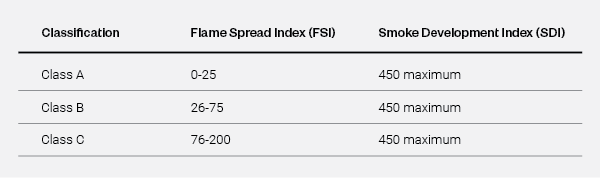
The International Building Codes for residential and commercial buildings, as well as the National Fire Protection Agency (NFPA), require interior walls and ceilings to be classified within ASTM E84 for fire safety reasons.   Three testing agencies all have pretty much the same standard: ASTM E84, NFPA 255 and UL 723. They classify a material as A, B or C as part of a wall or ceiling system. The focus is on getting people out safely.  That means the lower the flame-spread and smoke developed, the greater the chance people have to get out of the structure, as well as greater the chance firefighters can access the structure to manage the situation.

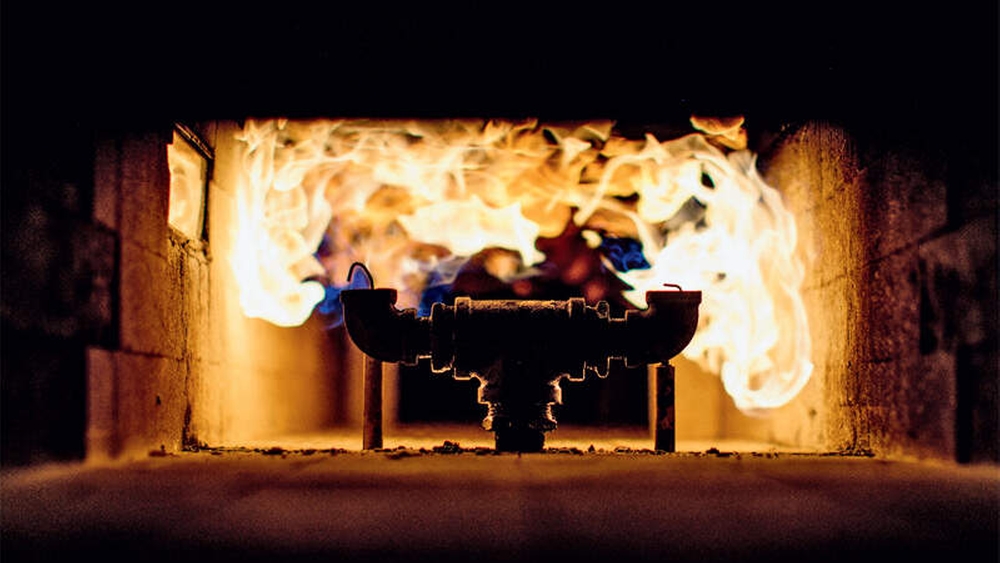
The test was designed in the 1940’s by Albert Steiner and consists of a large steel box lined with fire resistant brick and a flame source at one end.   The flame spread is a measurement of how far and how fast fire will travel on the material being tested once ignited.  You might have guessed that less is better.    The other part of the test measures the smoke produced.   Again, less is better, since heavy smoke decreases visibility, making it hard to see where you are going. This happens to be one of the most common reason people injure themselves in a home fire. [EG2] [JT3]  Smoke is toxic as well, and it really shouldn’t be inhaled.  I’d say it’s a little better to experience wood smoke than plastic chemical smoke, but it’s all bad for you in the end.  

TimberBoard, used on the exterior of a home, meets a Class B fire rating without any added chemical flame retardants.  Below, you can see how well it performs against an open flame compared to other foam insulations. Both our cavity insulations, TimberBatt and TimberFill, have Class A fire ratings.  This means they help reduce the spread of fire in a home and allow you to get out quickly.  In fact, code recognizes that they both add 15 minutes of fire resistance to a rated wall assembly.  They can also be added as a thermal barrier for foams that can’t be left exposed because of potential fire. TimberFill and TimberBatt are dense enough to meet the requirements for fire blocking in walls as well.  This keeps flame from spreading within a wall from one floor or cavity to the next. See for yourself:

https://vimeo.com/timberhpinsulatebetter/burntimberboard?share=copy

In the case of TimberBatt and TimberFill, we introduce borate as a flame retardant when we fiberize wood chips to make insulation.  Other fire retardants can be used, but borate is a preferred additive used often in insulations and other building materials.  Fiberglass and cellulose insulation manufacturers use borate to improve the performance of their products. We add our fire retardant in liquid form, which maximizes the bond to wood fibers. Cellulose, by comparison, contains borates in a dry form that doesn’t bond as securely, can leach off over time, and can add residual dust. See how our batt and fill perform during our fire tests:

https://vimeo.com/timberhpinsulatebetter/burntimberfill?share=copy
https://vimeo.com/timberhpinsulatebetter/burntimberbatt?share=copy

TimberHP insulation checks all the boxes when it comes to fire safety.  So come out of the cave, and rest assured that you are using one of the safest products out there!  

Insulate better. Live better.  TM