

Promoting Energy Efficient Building Construction
With a superior thermal barrier, moisture management, unmatched acoustics, and fire resistance, TimberHP wood fiber insulation delivers performance you can feel.
R-value? We’ve got that.
But the performance benefits of wood fiber insulation go beyond the R-value, so you can build better for people and the planet.
How Does Insulation Improve Thermal Envelope Performance?
Insulation plays a critical role in building envelope performance by reducing heat transfer, limiting thermal bridging, improving occupant comfort, and supporting energy efficiency. A well-designed thermal envelope helps maintain consistent indoor temperatures while reducing heating and cooling loads throughout the year. Insulation materials that also manage moisture and air movement can further improve building durability and resilience. Wood fiber insulation contributes to building envelope performance by providing thermal resistance while remaining vapor open, allowing assemblies to dry and function as intended over time.


Fire Resistant
Despite being made from wood, TimberHP wood fiber insulation products are fire resistant without the use of toxic chemicals. TimberBatt and TimberFill achieve an ASTM E84 Class A flame and smoke spread rating thanks to treatment with liquid borate, a naturally occurring mineral that provides effective fire resistance without relying on harmful flame retardants. TimberBoard achieves a Class B rating without any added fire retardants.

Protects the Thermal Envelope Year-Round
Wood fiber has a superior heat storage capacity compared to conventional insulation; in addition to providing a stable R-value for reducing heating loads in winter, it also outperforms conventional insulation at keeping interiors cool in summer. Meet energy efficient building construction requirements for Passive House, LEED, and energy stretch code targets with year-round thermal performance.

Moisture Management
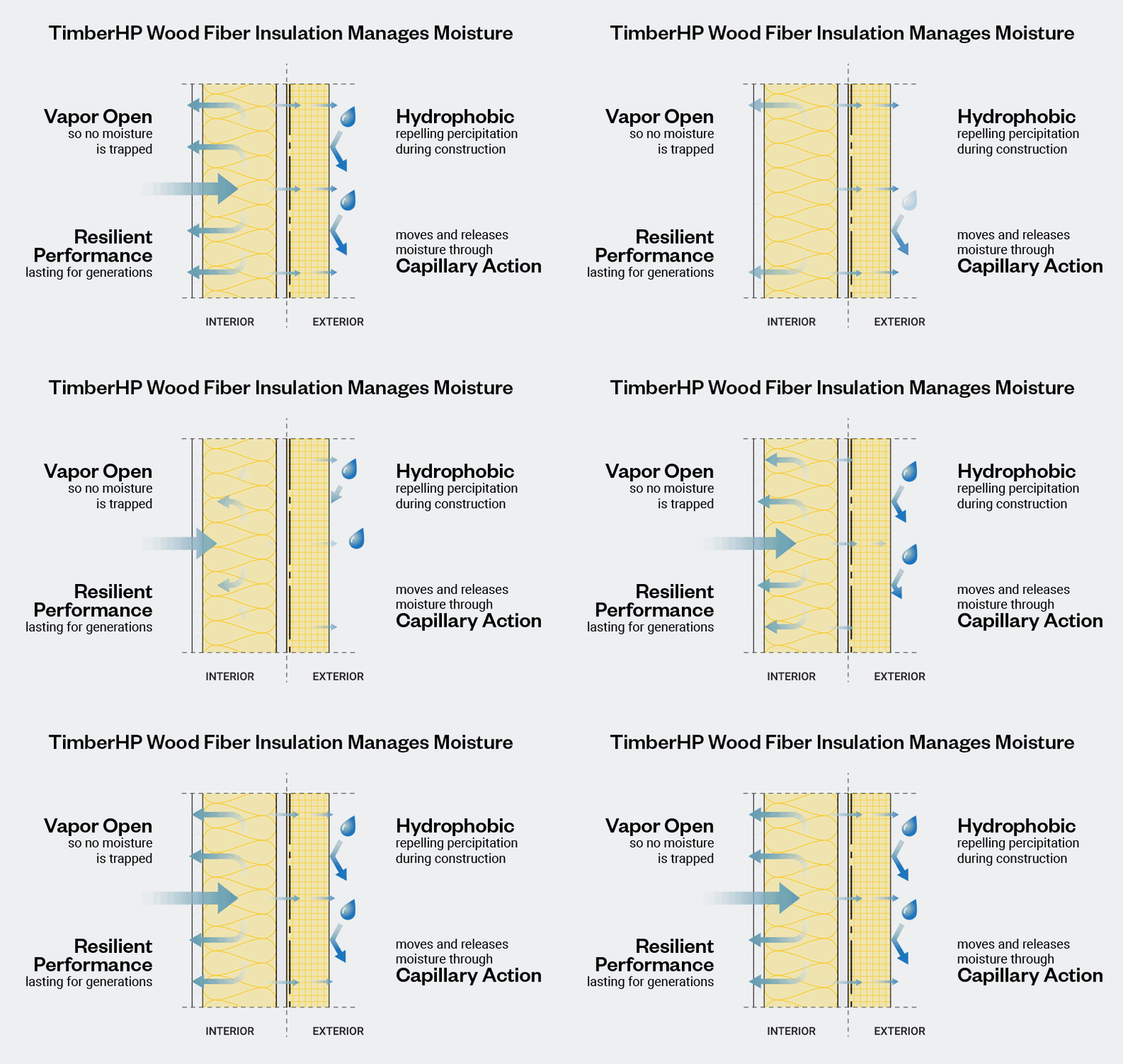
Wood fiber insulation is vapor-open and breathable, helping avoid the moisture issues commonly associated with foam insulation products. Water vapor passes through the insulation rather than becoming trapped, preventing mold, condensation, and rot, and promoting improved indoor air quality and a longer-lasting building and thermal envelope.

We’re using the TimberFill or TimberBatt for sound when there’s an elevator on the other side of an apartment wall where there are mechanicals. People previously rendered them unlivable because the sound is just annoying, and this product has been a charm because of the sound-deadening insulation. We’re all in.
Todd Rothstein
Director of Construction, Avesta Housing
