TimberBatt™ Earns Third-Party Verified EPD—Proving It Stores More Carbon Than It Emits
We’re excited to share a major milestone: TimberBatt™ wood fiber insulation now has a third-party verified Environmental Product Declaration (EPD). In simple terms, an EPD means a product’s environmental impacts have been independently measured, verified, and published using internationally recognized standards. For TimberBatt, the results confirm what we’ve believed all along: TimberBatt doesn’t just reduce carbon emissions—it actively stores carbon. A Third-Party Verified, […]
We’re excited to share a major milestone: TimberBatt™ wood fiber insulation now has a third-party verified Environmental Product Declaration (EPD).
In simple terms, an EPD means a product’s environmental impacts have been independently measured, verified, and published using internationally recognized standards. For TimberBatt, the results confirm what we’ve believed all along: TimberBatt doesn’t just reduce carbon emissions—it actively stores carbon.
A Third-Party Verified, Carbon-Storing Insulation
Developed using One Click LCA and independently verified by EPD Hub Limited, TimberBatt’s EPD complies with ISO 14025 and ISO 21930:2017. The declaration evaluates environmental impacts across the full life-cycle scope, including:
Cradle-to-Gate (A1–A3)
Transport & Installation (A4–A5)
End-of-Life (C1–C4)
Module D (beyond building life)
The results show that TimberBatt is a net carbon-storing insulation material, with a negative global warming potential (GWP) driven by biogenic carbon stored in the wood fiber feedstock.
On a cradle-to-gate (A1–A3) basis, TimberBatt stores approximately 1.34 tons of CO₂ per ton produced, increasing to 1.59 tons when full life-cycle and Module D impacts are included. This carbon storage is enabled by TimberBatt’s material and manufacturing approach:
Made from residuals of lumber manufacturing and forest management
Manufactured using renewable electricity, including hydropower
Carbon stored in the insulation remains locked in place for the life of the building
This fundamentally differentiates TimberBatt from conventional insulation products derived from glass or mineral wool fibers.
A New Category of Insulation: Carbon-Storing by Design
Most insulation materials carry a positive embodied carbon footprint because their production requires energy-intensive processes that generate greenhouse gas emissions. As a result, even high-performing options like mineral wool contribute to upfront emissions before a building is ever occupied.
TimberBatt represents a new category of insulation:
Carbon-storing, not just carbon-reducing
High thermal and acoustic performance
Fire-code compliant and commercially available
Costs less than conventional mineral wool insulation
Rather than adding carbon to the atmosphere, TimberBatt stores atmospheric carbon inside the building envelope, helping to shift buildings from being a climate liability to being part of the climate solution.
What Does “Carbon-Storing Insulation” Mean in Practice?
One of the most compelling aspects of carbon-storing insulation is how simple the impact can be.
Reducing embodied carbon doesn’t always require new technologies, complex design changes, or higher costs. Sometimes, it comes down to a single specification decision.
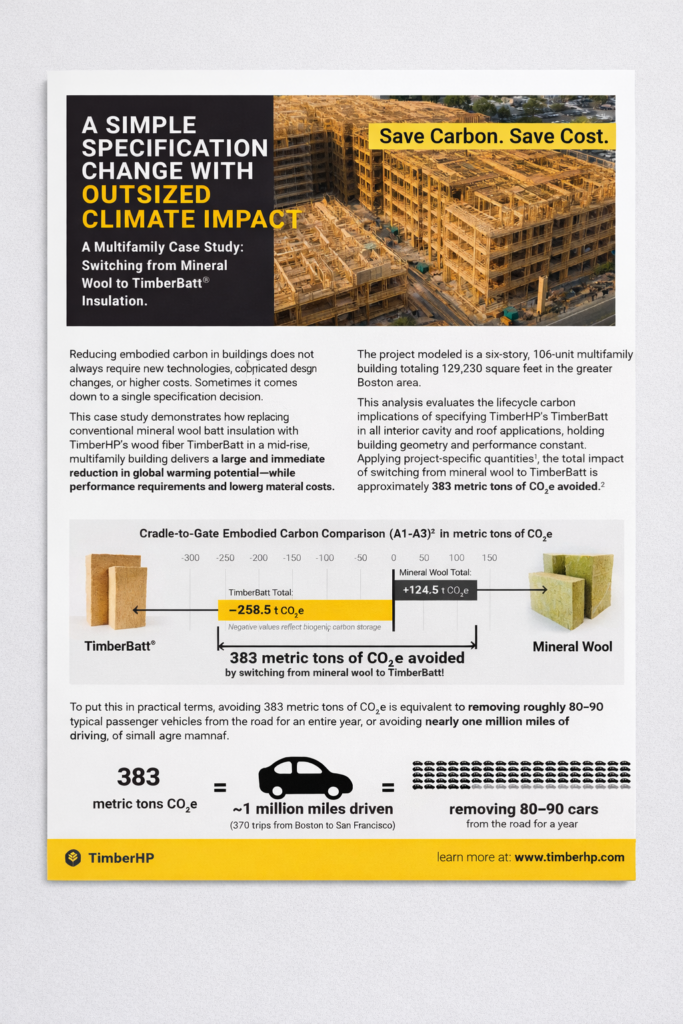
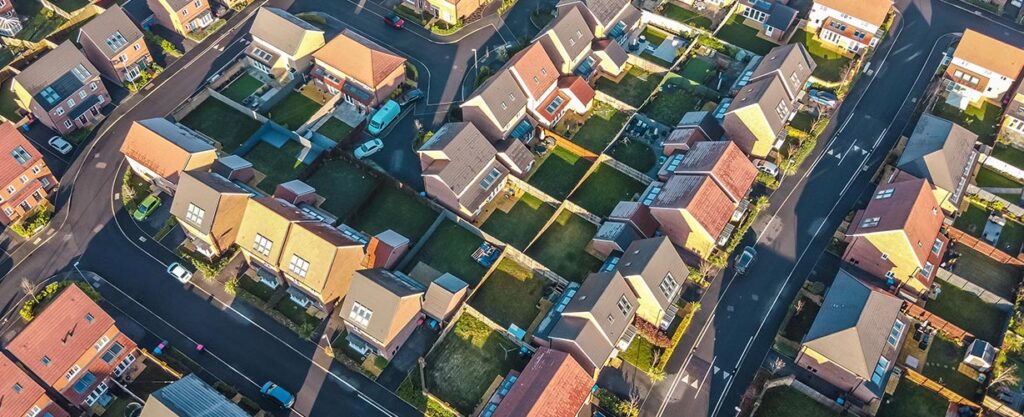
To illustrate this, TimberHP modeled a mid-rise, multifamily building where the insulation specification is changed from mineral wool batts to TimberBatt—while holding building geometry and performance constant.
Modeled project example:
Six stories
~100+ dwelling units
Greater Boston area
Interior cavity and roof batt insulation applications, totaling 113,700 cubic feet of insulation
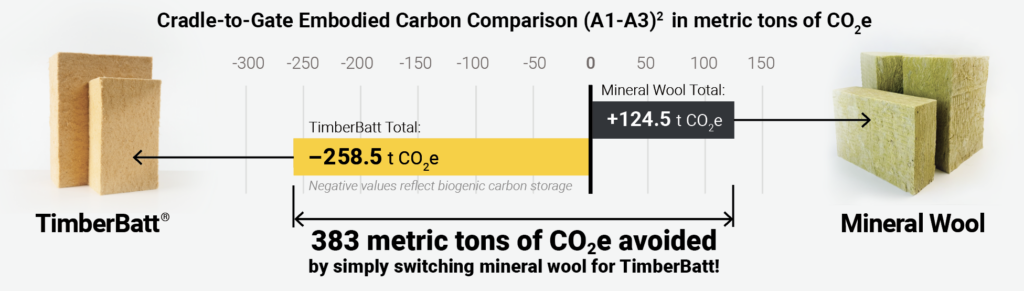
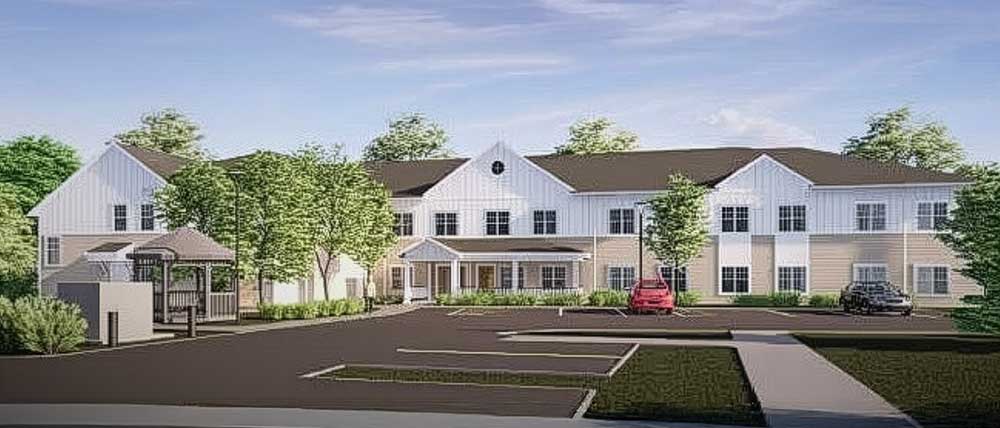
Using product-specific EPD data and project-specific quantities, the modeled analysis shows that switching from mineral wool to TimberBatt can avoid approximately 380+ metric tons of CO₂e in upfront embodied carbon.
That level of impact is extraordinary for a single material substitution—and it happens immediately, at the time of construction.
Translating Carbon Savings Into Real-World Terms
To make that impact easier to visualize, according to the EPA equivalency calculator, ~380 metric tons of CO₂e avoided is equivalent to:
Nearly 1 million miles of driving in a typical passenger vehicle (Or roughly 370 one-way trips between Boston and San Francisco)
Removing 80-90 cars from the road for a year
And importantly, this is upfront embodied carbon—not an annual operational estimate. The climate benefit is realized as soon as the building is constructed.
Is manufactured domestically and available at commercial scale
Is typically lower-cost than mineral wool
For architects, builders, and developers, this represents a rare alignment: lower embodied carbon, strong performance, familiar installation, and no technical or regulatory barriers.
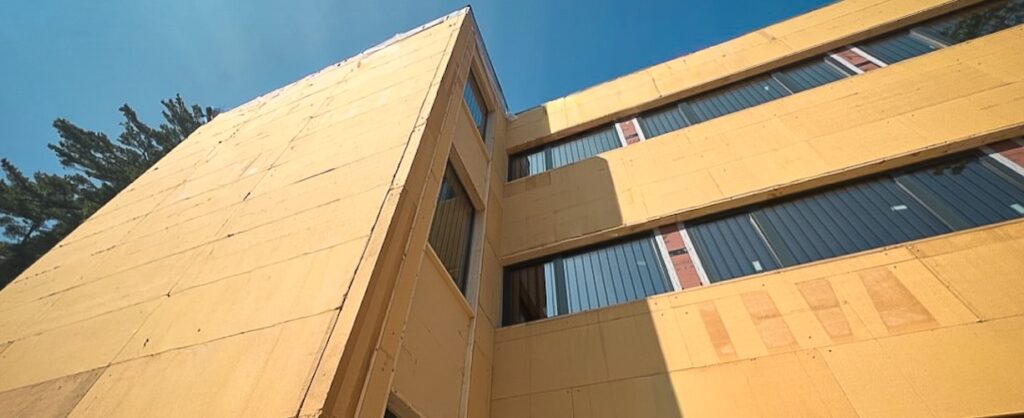
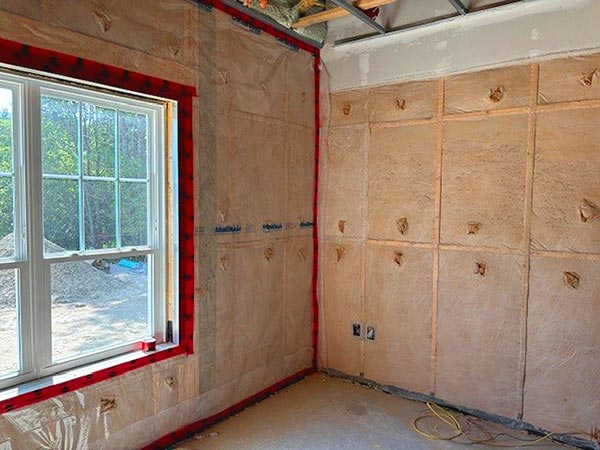
Photo Credit: University of Maine
A Measurable Climate Action Available Today
As embodied carbon becomes a critical consideration in building design, materials that actively store carbon—rather than simply emit less—represent a meaningful shift in how we think about climate-aligned construction.
TimberBatt’s verified EPD confirms that wood fiber insulation can play a powerful role in reducing the carbon footprint of buildings, while delivering the performance the industry expects.
In an era where climate targets increasingly demand measurable, immediate reductions, switching from mineral wool to TimberBatt is one of the simplest, fastest, and most effective material substitutions available for reducing embodied carbon in construction.
Notes on Data & Modeling
The multifamily example above is a modeled comparison using product-specific EPD data and representative project quantities. Actual project results will vary based on building design, scope, and application. TimberHP continues to collaborate with project teams and LCA practitioners to evaluate real-world buildings using verified EPD data.
TimberBatt is supported by a third-party verified Environmental Product Declaration developed using OneClick LCA and verified by EPD Hub Limited in accordance with ISO 21930:2017 and ISO 14025 under EPD Hub Core PCR version 1.2 (24 March 2025). The declared unit is one square meter of insulation at RSI 1, with a declared unit mass of 1.84 kilograms. TimberBatt’s cradle-to-gate (A1–A3, TRACI) global warming potential is −2.47 kg CO2e per declared unit, reflecting the biogenic carbon stored in the wood fiber relative to manufacturing emissions; end-of-life emissions are not included in A1–A3. By comparison, ROCKWOOL Comfortbatt WS R13, reported on the same declared unit basis, carries a positive cradle-to-gate GWP of approximately +1.29 kg CO2e per declared unit.
Sustainable Building Solutions Are Driving the Construction Industry
Sustainable building solutions like wood fiber insulation are supporting a shift toward decarbonization, energy efficiency, and other goals.
Sustainability isn’t a buzzword anymore.
It’s becoming the defining priority of the modern building industry. From material selection to energy use to end-of-life planning, today’s building professionals are searching for sustainable building solutions that deliver real performance while reducing environmental impact. And insulation, long treated as a commodity, has emerged as one of the most powerful levers for change.
What It Means to Build for the Future
Changes in the construction industry are typically driven by four different priorities to make more planet-friendly choices:
Decarbonization
Electrification
Materials
Waste Reduction
Collectively, these four priorities represent a commitment to lower emissions, healthier environments, and a circular economy that values renewable, low-impact materials. And as building professionals seek new pathways to achieve these goals, insulation – an often overlooked yet impactful building material – is receiving renewed attention.
Insulation is a critical component of the built environment, reducing the dependency on active heating and cooling systems and providing stable temperature control during winter and summer months. Advances in insulation technology have led to sound dampening qualities, moisture management, and improved fire resistance.
Sustainable insulation products like wood fiber are gaining popularity as builders and homeowners are increasingly aware of the indoor air quality and health considerations associated with conventional insulation materials like fiberglass, mineral wool, and spray foam.
But insulation is just one area where the construction industry is pivoting toward more responsible materials and practices. Buildings are no longer just places to live and work – they’re part of a climate solution.
In this article, we’ll explain the priorities of the building industry driven by a desire to minimize climate impact and maximize building performance.
Buildings are no longer just places to live and work – they’re part of a climate solution.
Priority 1: Decarbonization
Reducing carbon footprints has long been a strategy toward greater sustainability. In the construction industry, better design and material selections can help reduce:
carbon emissions associated with manufacturing materials
heating, cooling, and powering a building
material disposal
Embodied carbon has become an important way the industry can meet sustainability goals.
Unlike operational carbon, which are the emissions released during a building’s use, embodied carbon refers to the greenhouse gas emissions produced throughout the life cycle of a building: material extraction, manufacturing, transportation, installation, and end-of-life disposal.
According to a 2024 article by the World Bank, the construction, operation, and production of materials used in the building industry account for 40% of carbon emissions globally.
However, a 2023 International Finance Corporation report found global buildings and construction-related carbon emissions could drop 23% by 2035 through the implementation of energy-efficiency and electrification.
As we rethink building materials and design to help reduce embodied carbon, up-cycled, recyclable, bio-based, and low-carbon alternatives are gaining momentum. Some building materials that help reduce carbon emissions include:
Bio-based materials like bamboo, hempcrete, straw, and cork.
Recycled and upcycled materials like recycled steel, recycled plastics and glass, and recycled bricks.
Low-carbon concrete alternatives like green concrete, ferrock, and ashcrete.
How Wood Fiber Helps Meet Carbon Goals:
Unlike conventional insulation materials like spray foam, which is made from petrochemicals and has a high level of embodied carbon, and fiberglass, which requires energy-intensive manufacturing and has moderate embodied carbon,wood fiber insulation is carbon-negative at the factory gate, storing more carbon than is produced during the manufacturing process: A1 (raw material supply) through A3 (manufacturing).
Wood fiber insulation stores biogenic carbon absorbed by trees, locking the carbon in buildings for the life of the material.
At TimberHP, we source clean, dry softwood residuals from regional lumber production – material that would otherwise be downcycled or burned. Wood fiber is naturally carbon-negative, storing more carbon than is released during manufacturing.
Buildings using wood fiber insulation lock away atmospheric carbon in the built environment, a significant step toward decarbonization.
Priority 2: Electrification and Building Envelope
The movement away from fossil fuels and toward electric power, or electrification, is reshaping how the construction industry approaches building performance. Some electrification solutions include:
Electrified equipment, such as heat pumps, electric water heaters, electric cooking appliances, and energy-efficient lighting.
Energy-efficient integrations like smart thermostats, solar panels, sealing ductwork, and closing air leaks and gaps around windows and doors.
Electrification can help make buildings more sustainable – but there is a catch. Without a high-performance building envelope, the benefits from those electric power solutions, especially efficiency integrations like smart thermostats and solar panels, can be less impactful.
Tight, well-insulated structures minimize energy loss and help stabilize indoor comfort, ultimately raising the efficiency of electric power systems.
How Wood Fiber Improves the Building Envelope:
Wood fiber insulation offers exceptional thermal performance and moisture management, contributing to a tight building envelope and enabling electric systems to operate at peak efficiency.
When coupled with renewable energy sources like solar or wind, buildings with robust envelopes can support net-zero strategies.
In other words, insulation is infrastructure for electrification. Choosing renewable materials ensures that this foundation aligns with broader sustainability goals, not against them.
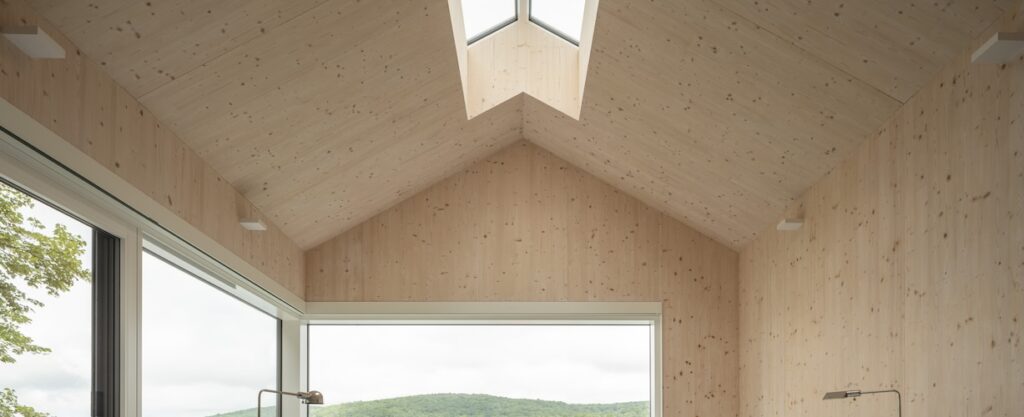
Photo Credit: OPAL Architecture
Priority 3: Responsible Materials
Beyond carbon emissions and efficiency upgrades are the materials. Using materials that are carbon- or energy-intensive to produce, and that are not renewable or recyclable, undermines the sustainability impact.
Furthermore, some sustainable materials are coated or mixed with chemicals like flame retardants and petrochemical binders that are dangerous to handle during installation, and can release volatile organic compounds (VOCs) into indoor spaces once installed.
Specifiers and installers are increasingly selecting more responsible materials that don’t compromise on a major component of sustainability.
Some examples of more responsible alternatives to traditional materials include:
Recycled steel, which is produced using melted and reformed scrap metal. This steel is considered sustainable when a significant amount is made from recycled content using EAF (Electric Arc Furnace) technology.
Cool roofing, which uses reflective materials to minimize heat absorption and reduce the load on air conditioning systems.
Green roofing, or a “living roof” system, which helps insulate roofs and manage rainwater, reducing energy usage and the urban “heat island” effect.
Low-E windows, which have a special coating that reflects infrared light, keeping heat inside during winter and outside during summer.
Cross-laminated timber, a wood-based strong and sustainable alternative to traditional concrete and steel for more energy-efficient construction.
Phase-change materials, which reduce loads on HVAC systems by absorbing and releasing heat to regulate building temperatures.
How Wood Fiber Delivers Sustainability and Performance
Wood fiber insulation offers a high-performance thermal barrier; high R-values and thermal storage deliver year-round comfort, draft reduction, and stabilized temperatures, contributing to overall energy efficiency.
Plus, wood fiber insulation is renewable, reusable, and made from residuals. Its durability and density provide industry-leading sound dampening across walls, and wood fiber is vapor open for superior moisture management that promotes indoor air quality.
Waste Reduction
According to the World Green Building Council, the building industry produces one-third of the world’s waste, much of which ends up in landfills or incinerators. The WGBC posits that recycling alone won’t help companies reach net-zero or other carbon reduction goals – the solution is moving material consumption to a circular economy.
A circular economy in the building sector would mean designing out waste and pollution, keeping products in use for as long as possible and regenerating natural systems.
There are several examples of a circular economy currently in use in the building industry:
Deconstruction: Recovering building materials at end-of-life that can be reused or recycled.
Cradle to Cradle (C2C): Using materials with infinite lifecycles – meaning they can be continuously reused without losing value or performance.
Modular and Customizable Units: Building components designed to be assembled, broken down, and relocated for continuous use in different configurations.
Digitalization: Building Information Modeling (BIM) tools can increase operational efficiency, reduce waste, and improve visibility into material availability and reuse potential.
PaaS Business Model: A product-as-a-service business model focuses on designing products for longevity, ease of maintenance, reconditioning, and ability to be continuously reused.
How Wood Fiber Reduces Building Material Waste
Wood fiber insulation is a highly responsible building material. In addition to being circularity-aligned, it is made using residual byproducts from normal forestry activities that would otherwise be discarded.
This circular approach transforms natural softwood chip waste into a valuable, high-performance insulation solution, closing the loop on material life cycles and reducing the building industry’s dependence on virgin, nonrenewable resources.
While the U.S. does not yet have a large-scale circular pathway for wood fiber insulation, the material is inherently compatible with future circular systems due to its clean fiber composition.
In an era where builders are looking for solutions that align with LEED and Passive House certifications, and are compatible with IRC and IECC standards, renewable wood fiber insulation is a great choice for lower-impact, circular construction.
The Future of Insulation is Renewable
Wood fiber insulation has been used and trusted in Europe for more than 20 years. While it can be shipped to the U.S. for use in construction, the timelines and cost often present challenges for building projects.
For the first time, high-performance wood fiber insulation is manufactured in the United States at scale. TimberHP’s model supports regional manufacturing, rural job creation, and a renewable domestic supply chain—helping reduce reliance on petrochemical insulation products.
In the U.S., this shift is only beginning, but it’s accelerating fast.
U.S.-made wood fiber insulation supports an ecosystem of sustainable forestry and lumber production, rural economic revitalization, and low-carbon construction. This model demonstrates what a truly renewable supply chain can look like in America: local, regenerative, and built to scale.
To achieve a renewable future for the building industry, it will require the integration of many solutions, including carbon-negative and responsible materials, electrification, and circular thinking. Collectively, these trends point toward a new kind of building industry: one that doesn’t just minimize harm, but actively contributes to environmental restoration.
Policy frameworks — from state-level Building Performance Standards (BPS) to evolving energy codes like IECC 2021/2024 — are accelerating demand for low-carbon, high-performance materials that support healthier indoor environments. Even as certain IRA efficiency incentives approach their scheduled sunset, the broader push toward electrification, improved IAQ, and carbon-smart construction continues to intensify. Wood fiber insulation stands out as a practical, scalable step toward code compliance, healthier buildings, and industry leadership.
The building industry has an opportunity to align every phase of construction – design, sourcing, installation, and performance – with a carbon-negative, renewable insulation product – TimberHP.
The future of insulation is renewable, and the future of construction depends on it.
5 Reasons to Choose Insulation Made From Abundant, Residual Wood Chips
Made from sustainable insulation materials, TimberHP wood fiber insulation products provide numerous benefits in the build.
Interest in sustainable insulation materials is growing among architects, builders, and designers as concern over the health and environmental impacts of spray foam and other traditional insulation materials becomes more widespread.
Because insulation needs to deliver on specific performance standards and expectations, providing quality and sustainability in the same insulation product can seem out of reach.
However, wood fiber is shifting what’s possible for insulation, enabling a high-performance, sustainable, healthy solution for batt, fill, and board – and when you dig deeper into how wood fiber insulation does what it does so well, the benefits are unignorable.
Proven and trusted in Europe for more than two decades, this innovative material is now being manufactured and made available in the U.S. for the first time from TimberHP. Our company saw the immense opportunity available to harness an abundant byproduct of the lumber industry to manufacture insulation that not only improves building comfort and efficiency, but reduces environmental impact in multiple ways.
So let’s dig a little deeper into how wood fiber insulation delivers on so many of the demands for performance and sustainability that building professionals and homeowners have today.
Here are five reasons why wood fiber insulation stands out as the smarter, healthier choice.
1. Safe and Reliable (Yes, This Includes Fire!)
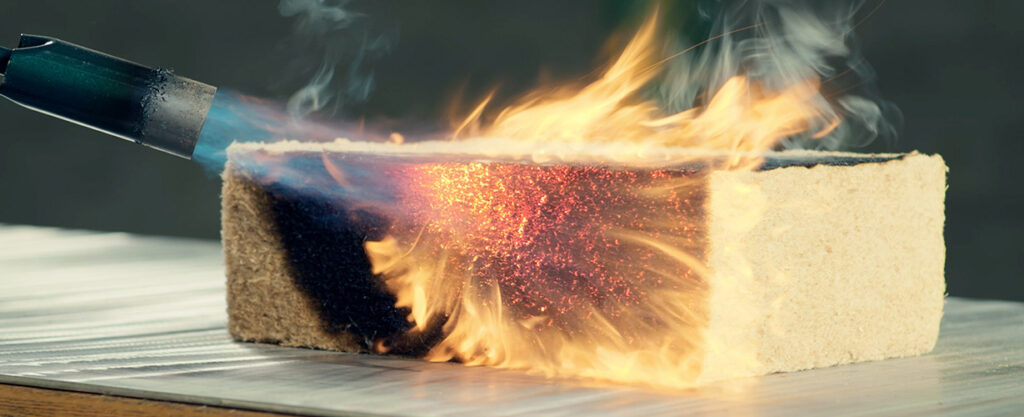
One of the misconceptions about wood fiber insulation is that it must be flammable since it’s made from wood. In fact, the opposite is true.
At TimberHP, we treat our wood fiber insulation with liquid borate, a naturally occurring mineral that acts as a flame retardant and makes our insulation resistant to fire and smoke spread.
Other qualities of wood fiber that make it ideal for safe, reliable insulation include:
Durability: With proper installation, wood fiber insulation can maintain its performance for decades, and contribute to the overall longevity of the structure itself.
Compliance: Our wood fiber insulation products undergo rigorous testing for safety and building code compliance, so you can be confident you’re installing a product that avoids rejections.
2. Requires Zero Deforestation to Source and Manufacture
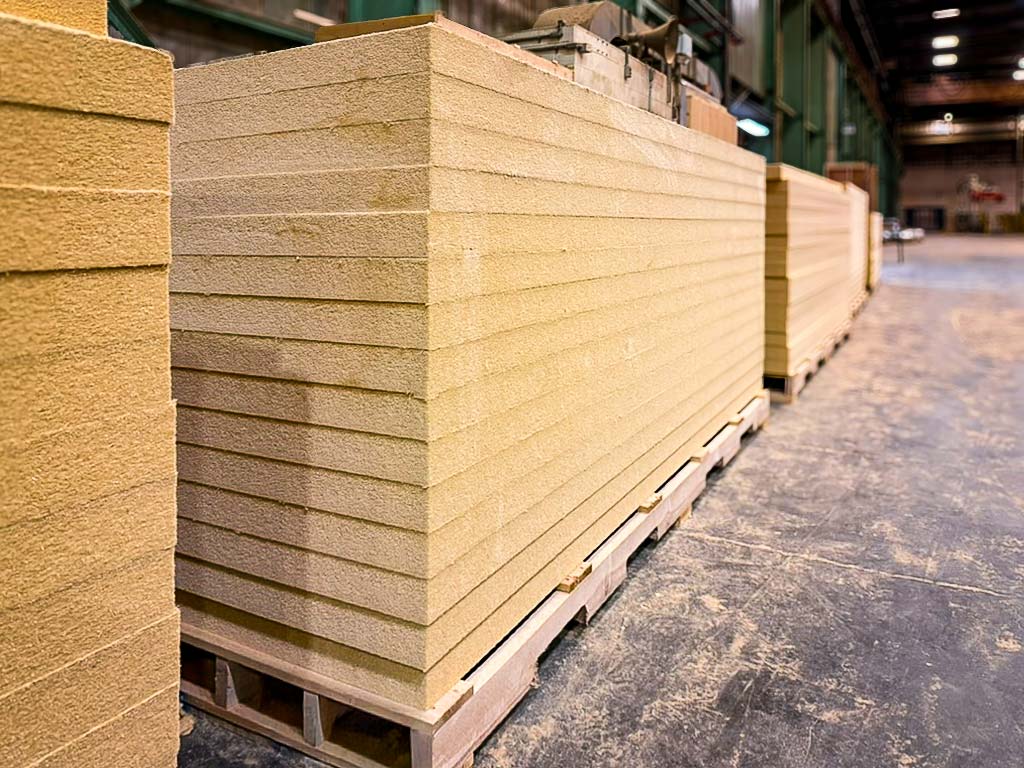
Wood fiber insulation is produced from abundant, residual softwood chips that are generated at lumberyards during the process of milling round logs into square boards. These wood chips are then delivered to TimberHP’s manufacturing facility (a refurbished paper mill) in Madison, Maine, where the chips are refined and pressed into different insulation products. We never cut down virgin trees for insulation material – we are leveraging natural byproducts of the lumber industry that would otherwise be discarded and transforming it into a high-performance insulation solution.
Additional benefits of using responsibly-sourced softwood chips include:
Supporting a circular economy: TimberBatt can be dismantled from building assemblies using conventional methods. Because it is primarily composed of untreated softwood fiber with biocomponent fibers and borate, making it technically suitable for reuse, recycling, or thermal recovery. (It’s important to note that no dedicated recycling infrastructure currently exists in North America). Intact batts could also technically be recovered and reused as insulation in new applications, or the fiber could be reintroduced into manufacturing. (Also important to note: these pathways would require development of a collection and processing system, which is not currently established).
Lower embodied energy: Manufacturing wood fiber insulation requires less energy than many synthetic insulation types, reducing the product’s overall environmental footprint.
3. Lowers the Environmental Impact of Housing
In addition to driving down the operational energy of buildings by reducing heating and cooling loads, wood fiber insulation is one of the rare insulation materials that actually stores more atmospheric carbon than it emits during production. Replacing conventional insulation with wood fiber helps to move the needle towards creating buildings that are climate assets instead of climate liabilities. In short, Wood Fiber Insulation packs a unique double carbon punch; it saves carbon AND stores carbon.
Housing and buildings have a significant impact on the environment, something that many architects, builders, and owners are looking to mitigate. Energy consumption and material production are substantial players in greenhouse gas emissions and resource depletion; the World Green Building Council reported in 2019 that buildings accounted for 39% of global energy-related carbon emissions: 28% from the energy needed to heat, cool and power them, and the remaining 11% from materials and construction.
Because trees absorb and store carbon dioxide as they grow, carbon remains locked in the wood fibers for the life of the insulation. When used in buildings, this stored carbon offsets the emissions from transportation and construction, resulting in a far lower impact than conventional insulation materials.
The benefits don’t stop there: throughout a building’s lifespan, wood fiber continues to store carbon, and at end of life, it can be recycled, reused, or converted into energy products like biochar. Even if landfilled, its overall emissions remain far lower than fiberglass, mineral wool, or spray foam.
Bonus Benefit: Wood fiber insulation is produced from byproducts of lumber operations, requiring significantly less energy to manufacture. That low embodied energy makes it one of the most environmentally responsible insulation choices available today.
4. Superior Thermal and Acoustic Comfort
The sustainability benefits of wood fiber insulation are clear, but it provides exceptional performance benefits as well.
Wood fiber uniquely excels at both thermal and acoustic performance thanks to the natural cellular structure of wood.
Thermal performance: Wood fibers contain microscopic pores that trap air, creating an insulating effect not unlike down feathers in a jacket that contain heat during cold winter days. This natural resistance to heat transfer provides steady indoor temperatures in both hot and cold seasons.
Thermal mass effect: Unlike lightweight foam insulations or mineral wool, wood fiber also slows down heat flow, helping to keep interiors cooler during the summer months. Plus, better temperature regulation means reduced load on HVAC systems and improved energy efficiency.
Acoustic performance: The porous, fibrous nature of wood fiber absorbs sound waves instead of reflecting them, which translates to quieter rooms, reduced echo, and better sound separation between spaces. Its industry-leading sound dampening performance is one reason why wood fiber insulation is in high demand for multifamily buildings.
5. Built-In Vapor Management
Moisture is one of the larger challenges in building science – homes and buildings are exposed to water vapor for a host of different reasons, and traditional insulation materials can trap moisture, leading to mold, mildew, and rot that rapidly breaks down the durability of the home.
However, the built-in vapor management of wood fiber insulation allows moisture to be absorbed and released without interfering with overall performance or trapping moisture against the wood framing and sheathing, a feature that is especially important for restorations or older homes where preservation is paramount, and in energy-efficient buildings with tighter envelopes.
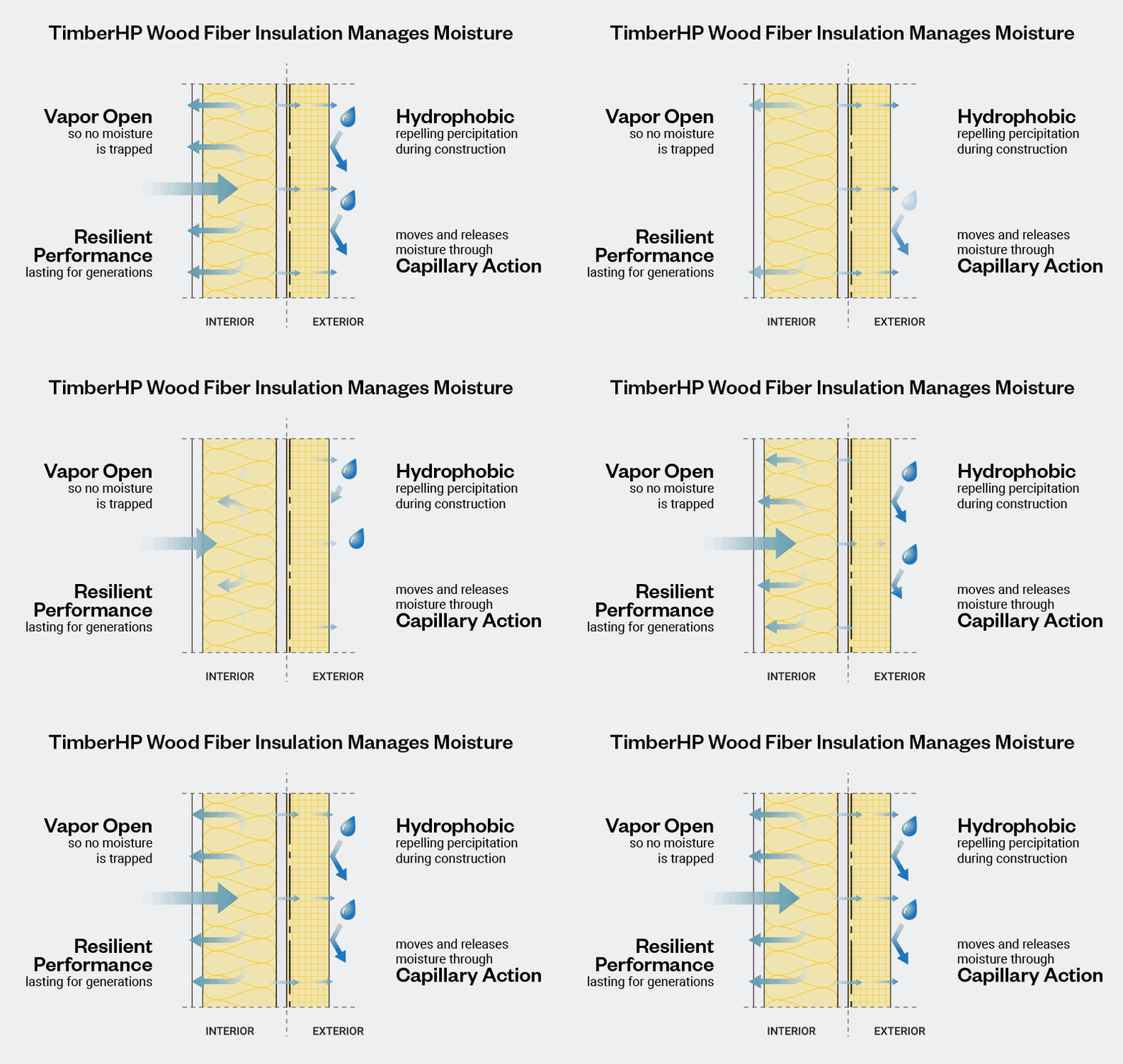
Essentially, wood fiber insulation allows buildings to “breathe,” much like the technology of a GORE-TEX jacket, reducing condensation risks and contributing to healthier indoor air quality.
Wood fiber is the key ingredient in an insulation product that is competitive with conventional insulation materials for cost and performance, all while being safer and healthier for people and the planet.
Choosing insulation made from abundant, residual wood chips means choosing more than just comfort. It’s a commitment to sustainability, carbon reduction, and building science excellence.
Insulation technology has moved us past the days when sustainability meant compromising on performance. Now, you can deliver superior thermal and acoustic comfort, vapor management, and fire resistance in one safe, healthy insulation material.
Wood fiber insulation is more than an alternative to traditional insulation materials – it’s an upgrade.
Insulation Solutions for Architects: Performance Meets Sustainability, Affordably
Wood fiber is one of the best insulation solutions for architects. Learn about this complaint, performant, and sustainable alternative.
It’s becoming increasingly common to hear architects talk about moving away from spray foam insulation—and many firms have gone ahead and established specific sustainability goals for the building products they specify.
When making a shift to healthier, more sustainable, higher efficiency products, building professionals rightly need to validate efficacy, durability, and long-term performance—not to mention the product’s sustainability claims. Is it sourced and manufactured responsibly, and does it help reduce the carbon footprint of the built environment over the long-term?
If this were a checklist, we’d be marking all the boxes next to wood fiber insulation. This proven insulation technology has been used in Europe for more than 20 years, and TimberHP is bringing domestic production to the []=U.S. for the first time. In this article, we explain why wood fiber is one of the best insulation solutions for architects who want sustainability without sacrificing design flexibility, aesthetics, or long-term building performance and safety.
Wood Fiber: Meeting Insulation Demands Across the Board
1. Code-Compliant & Performance-Ready
Being compliant with building codes and meeting design standards are non-negotiables, and if a product doesn’t stack up, that’s a non-starter. TimberHP wood fiber insulation solutions deliver proven R-value, fire resistance, and acoustic control you need to meet increasingly stringent building and energy requirements.
Compliance & Performance Snapshot:
Compatible with IECC and IRC standards
Meets Passive House and LEED certifications
Offers standard framing and enclosure details, eliminating the need to rethink your design approach
Are Class A fire rated (TimberFill and TimberBatt) through a borate treatment that provides effective fire resistance without using harmful flame retardants
TimberHP integrates right into conventional assemblies, so you can meet your sustainability goals using standard construction details without resorting to an entirely new building typology.
2. Third-Party Certified for Sustainability
There’s no greenwashing here – just third-party proof. Because we know architects don’t take a claim at face value. When we say wood fiber insulation is sustainable, we mean from the source, through manufacturing and installation, and beyond.
Sustainability Snapshot:
Wood naturally stores carbon, meaning even in the built environment it is helping mitigate climate change by keeping atmospheric carbon locked away
Wood fiber insulation is made from abundant residual wood chips, giving new life to a byproduct of sustainable forestry
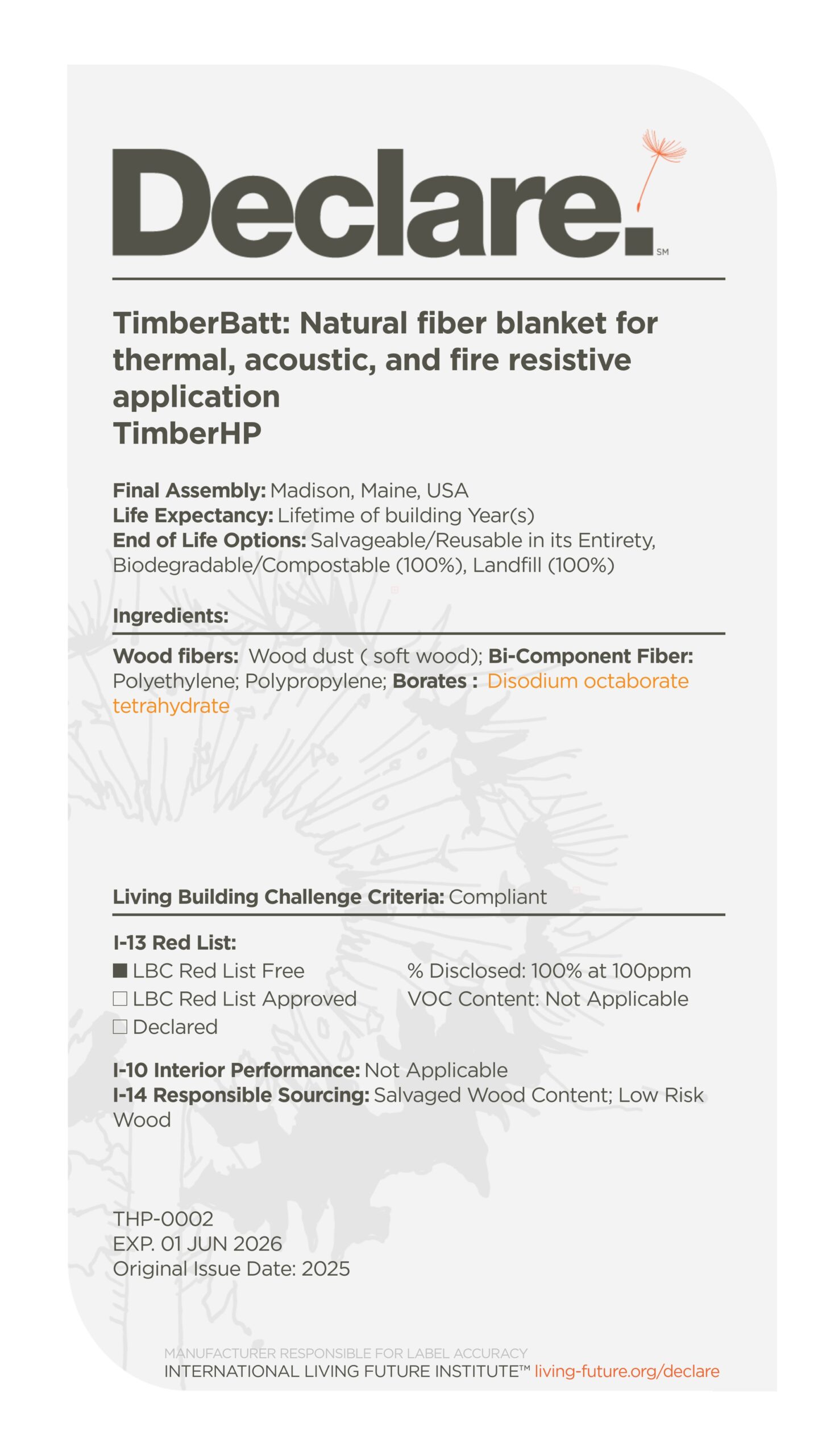
Wood fiber insulation has been certified by Declare Red List Free for indoor air quality
Completely free from toxic additives (Borate, used for fire resistance; is a naturally-occurring mineral that offers powerful protection without toxicity)
You can specify TimberHP confidently, knowing it meets the highest bar for sustainability, with performance and health benefits packed right on top.
3. Superior Thermal & Acoustic Comfort
What was that about high performance? We’re glad you asked. Sustainable products like wood fiber insulation are wonderful, but we wouldn’t want you to specify them if it meant sacrificing performance.
Thermal & Acoustic Snapshot:
Excellent R-values for thermal efficiency and year-round comfort
Outstanding sound attenuation, making it ideal for multifamily and mixed-use buildings
Vapor-open assemblies that support moisture management and long-term durability, preventing mold, rot, and condensation
With high heat capacity, wood fiber insulation protects against summer overheating and slashes cooling demand better than conventional insulation materials
Whether you’re designing a net-zero residence, a Passive House-certified apartment, or a high-performance office building, TimberHP supports your vision for a healthy, quiet, and efficient environment.
4. Design with Confidence
There’s a lot on the line when it comes to building material selection—your materials need to be available, clearly documented, and verifiable. Builder or installer preference can impact material selection, and cost parameters influence every final decision.
TimberHP is helping architects keep building construction costs low—our insulation products are affordable, comfortable to handle, and easy to install, reducing labor and material expenses. For example, using TimberFill inside cavities can reduce sprinkler costs, meeting fire protection needs and sound abatement measures with a single solution.
By choosing TimberHP, you can design with confidence, knowing your insulation spec supports both the project’s performance targets and your firm’s sustainability mission.
Wood Fiber Insulation Has Sustainability and Performance Built In
TimberHP makes it easier for architects to align performance, sustainability, and design continuity without compromise. Our wood fiber insulation products are engineered to meet the real-world needs of architectural practice, from detailing and documentation to certification and climate impact.
The architectural firms we work with made the shift toward wood fiber insulation for one clear reason: it checks all the boxes—from thermal and acoustic performance to impressive sustainability credentials—while supporting the architectural workflow with familiar construction detailing.
Curious how wood fiber insulation compares to what you’re currently using? Subscribe to our newsletter for regular updates about our wood fiber insulation products and to see how they stack up against fiberglass, foam, and mineral wool.
We know many of you have been eagerly awaiting TimberBoard’s arrival. The wait is finally over — and it was worth it. Our TimberBoard line is now rolling at our Madison, Maine facility, producing the first wood fiber continuous insulation of its kind made and sold in the U.S. This milestone has been years in […]
We know many of you have been eagerly awaiting TimberBoard’s arrival. The wait is finally over — and it was worth it. Our TimberBoard line is now rolling at our Madison, Maine facility, producing the first wood fiber continuous insulation of its kind made and sold in the U.S. This milestone has been years in the making, and we couldn’t be more proud to bring this high-performance, sustainable solution to the market.
Certification in Progress*
Because there’s no precedent for a product like TimberBoard in North America, we’re now entering a rigorous testing and certification phase with the International Code Council (ICC). Earlier this year, ICC published the acceptance criteria that will guide this process, setting the stage for TimberBoard’s full market entry. *update – we have received ourTimberBoard certification through the ICC Evaluation Service! You can see the TimberBoard ICC-ES Evaluation Report (ESR-5387) here.
The first product in the line is a 4′ x 8′ square-edge sheet, available in multiple thicknesses. Though untreated, its density offers inherent flame resistance, earning it a Class B rating under ASTM E84.
Why TimberBoard Matters
TimberBoard isn’t just another insulation product — it’s a breakthrough for the U.S. building industry. Made from abundant renewable wood residuals, TimberBoard is a carbon-storing insulation that helps turn buildings into long-term carbon sinks. It delivers the durability and compressive strength of rigid foam or mineral wool while remaining vapor-open, allowing assemblies to manage moisture safely and naturally.
TimberBoard Highlights
Thicknesses ranging from 1” to 9.25”
Vapor-open continuous exterior insulation with high compressive strength
Price competitive with rigid foam and mineral wool
Carbon-storing, made from abundant wood residuals
High-performing, sustainable, and affordable
Learn more about performance attributes and view technical resources on the TimberBoard product page.
A Clear Difference: Wood Fiber Vs. Other Insulation Options
Wood fiber insulation checks box after box for performance, health, and sustainability against other insulation options.
High-performance, healthy, and sustainable wood fiber insulation is now manufactured for the first time in the U.S. from TimberHP, allowing specifiers and installers to build better without compromise.
If you’re a builder, architect, or property owner, it can be a challenge deciding which insulation to use. You have no doubt made sacrifices in one area in favor of another, such as affordability versus sustainability, or high r-value versus toxicity… etc). Now, for the first time, we have a safe, affordable, fire-resistant, vapor-open insulation solution that is healthier, lowers carbon footprints and delivers thermal and acoustic performance, naturally. See for yourself how Wood Fiber measures up to Conventional Insulation Options.
Setting a New Standard for Performance
Wood Fiber
Mineral Wool
Spray Foam
Fiberglass
Cellulose
Thermal Barrier
High R-values, and thermal storage for year-round comfort, draft reduction, and stabilized temperatures. See our ICC-ES Evaluation Reports
High R-values but limited thermal storage.
High initial R-value but performance degrades with age/installation flaws.
Moderate sound reduction, less dense than wood fiber or mineral wool.
Fair sound absorption, inconsistent performance over time.
Fire Resistance
Fire-Resistant. Tested to ASTM E-84 Class A Flame/Smoke with the addition of liquid borate — no toxic chemical retardants. See our Fire Rated Wall Assemblies
Noncombustible. ASTM E-84, Class A Rated.
Generally combustible. Burns and emits toxic smoke unless heavily chemically treated.
Fire resistant, but melts under high heat.
Fire-retardant treated, but performance can decreases over time
Cost
Competitive with mineral wool and made with renewable materials.
Higher cost than TimberBoard. Competitively priced with TimberBatt, but not made using renewable materials.
Higher cost than TimberBoard.
Lower cost than TimberBatt
Comparable with TimberFill.
Promoting Healthier Environments & Living Spaces
Wood Fiber
Mineral Wool
Spray Foams
Fiberglass
Cellulose
Installation
Itch-free and has no VOCs, formaldehyde, or added toxins. Red List Free.
Can cause skin / respiratory irritation. PPE recommended.
Contains isocyanates and VOCs; requires full protective gear during install.
Causes skin irritation and respiratory issues. PPE required.
Dusty during install; requires masks and goggles.
Air Quality & Moisture Management
Vapor open & breathable. Doesn’t trap humidity, reducing the risk of condensation, mold, and rot. See Moisture Management in Action!
Vapor-open, but can absorb water and lose effectiveness if wet.
Airtight but vapor-closed — traps moisture, risk of hidden mold/rot.
Loses R-value when wet; prone to mold in damp conditions.
Vapor-open but absorbs moisture easily; needs chemical treatment.
A Product Lifecycle That’s Better for the Planet
Wood Fiber
Mineral Wool
Spray Foam
Fiberglass
Cellulose
Carbon Footprint (Cradle to Gate)
Carbon Negative — stores biogenic carbon absorbed by trees, locking the carbon in buildings for the life of the material. See More Carbon Storing Details
High-energy, carbon-intensive production.
Made from petrochemicals; very high embodied carbon.
Lower carbon impact, but often stores about as much carbon as is emitted during manufacturing.
Sustainability in Sourcing and Manufacturing
Made in Maine from abundant, residual softwood chips produced as byproducts of lumber yard milling. Stores more carbon than is produced during the manufacturing process.
Made with a percentage of recycled materials, including natural stone. Uses an energy- intensive manufacturing process.
Some spray foam options offer sustainable materials like soy, castor oil, or recycled plastics and water-based blowing agents in place of chemicals. Manufacturing sustainability depends on chemical components and blowing agents.
Can be made using recycled glass and is produced using sand, a renewable resource. Uses an energy- intensive manufacturing process.
Made from recycled paper and uses less energy to produce.
Recyclability at End-of-Life
100% recyclable & renewable
Not recyclable – ends up in a landfill.
Not recyclable and is considered hazardous waste upon disposal.
Not recyclable and is considered hazardous waste upon disposal.
Not easily recyclable.
Vapor Open
Breathes without trapping humidity.
Unmatched Acoustics
Industry-leading sound dampening.
Superior Thermal Barrier
Year-round comfort.
Fire Resistant
Protects from fire/smoke with the addition of liquid borate.
Sustainable at the Source, Incredible in the Build
Renewable Maine-sourced wood that’s recyclable, renewable, reduces carbon footprints, and meets building codes and requirements.
Easy to Install, Comfortable to Handle
No itch – no gloves needed. Just natural comfort and performance.
Promotes Building Durability and Indoor Air Quality
Fire-resistant and vapor open, protecting your building for the long-term.
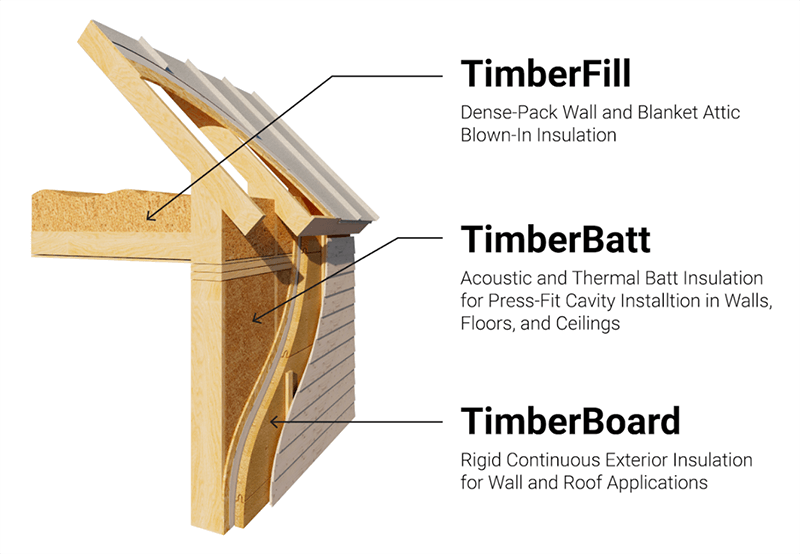
One System. Three Solutions
TimberBatt
A high-density, semi-rigid batt for framed cavity applications.
TimberFill
A loose fill or dense pack for attics and walls.
TimberBoard
A dense, rigid board for exterior continuous insulation.
Powerful as drop-in replacements or together for walls, roofs, floors, ceilings, and exterior continuous insulation.
Can You Really Build Better With Wood Fiber Insulation?
Why make the switch to TimberHP? Because you really can build better with wood fiber insulation, and our latest blog explains how.
What it means to “build better” is different for everyone; it can refer to reaching sustainability goals, finding more efficient ways to meet building codes, utilizing advanced building technologies, or increasing overall building durability and resilience.
However you define “building better” for your specific project, wood fiber insulation adds a whole new meaning. What have largely been singular achievements – like reducing a building’s carbon footprint or designing for greater energy efficiency – can now be collectively attained with wood fiber insulation.
From our US-based manufacturing facility, TimberHP produces three wood fiber insulation products: TimberBatt, TimberFill, and TimberBoard, and all three support a strong performance and sustainability narrative, having been used in everything from historic retrofits to Passive House construction.
For specifiers and installers: This article explains how wood fiber insulation is changing the way we think about construction and the standards that guide product decisions.
You’ll learn how wood fiber insulation:
satisfies building codes while delivering certified performance backed by decades of proven use.
solves common challenges and issues experienced with more traditional insulation solutions.
helps you meet important project goals, whether related to sustainability or performance.
Building Trust: Codes, Compliance, & Performance
Delivering on the Core Requirements for Construction Materials
Insulation choice typically comes down to two preferences:
Sticking with the long-used, often cheaper fiberglass and spray foam options that can get the job done sufficiently to meet code requirements and deliver on basic performance expectations.
A desire to adopt more sustainable materials and find something healthy and renewable that’s easy to work with and won’t impact performance.
Wood fiber insulation satisfies the latter – and then some. Building better with wood fiber insulation is possible on multiple fronts because it’s a material that’s healthier, lowers carbon footprints, and delivers thermal and acoustic performance – naturally. We know how to build efficiently with the renewal resource of lumber; therefore, wood fiber insulation, the byproduct of lumber production, is a no brainer.
But beyond the physical (no itch!) and emotional (made in Maine) feel-good stories, wood fiber insulation also checks the boxes for the technical stuff too – meeting building codes and carrying the right certifications for compliance and performance requirements.
Codes & Certifications
Building Code Compliance: Our wood fiber insulation products are designed to meet International Building Code (IBC) and International Residential Code (IRC) standards, making TimberBatt, TimberFill, and TimberBoard a great fit for residential, multi-family, and commercial construction.
Fire Resistance: TimberBatt and TimberFill achieve an ASTM E84 Class A flame and smoke spread rating, while TimberBoard achieves Class B without any added fire retardants. TimberBatt and TimberFill are treated with liquified borate, which saturates the wood fiber and provides a superior long-term solution for fire, bug, and moisture/mold resistance. Independent certification through ICC-ES further validates fire-resistance claims and safe installation guidelines.
TimberBatt
ASTM E84 Class A <25 Flame and <450 Smoke spread
FSI: 10 SDI: 15
– Superior fire resistance – Burns very slowly – Produces minimal smoke
TimberFill
ASTM E84 Class A <25 Flame and <450 Smoke spread
FSI: 5 SDI: 0
– Superior fire resistance – Minimal contribution to fire spread – Highest rating under ASTM E84
TimberBoard
ASTM E84 Class B Flame and Smoke Spread
FSI: 26-75 SDI: 450 or less
– Burns at a moderate rate – Moderate smoke production – No added fire retardants
Performance
Thermal Performance: TimberBatt delivers about R-4 per inch, and TimberBoard ranges between R-3.4 to R-3.7/inch, with excellent thermal mass for year-round comfort
TimberBatt
Acoustic & Thermal Cavity Insulation
R-3.7 to R-4 per inch
TimberFill
Dense Pack & Blanket Insulation
~R-3.8 per inch
TimberBoard
Exterior Continuous Insulation
R-3.4 to R-3.7 per inch
Acoustic Performance: Fire-rated assemblies incorporating TimberHP deliver Sound Transmission Class (STC) ratings of 50–55, and Outdoor-Indoor Transmission Class (OITC) ratings predominantly above 30. TimberBatt alone boasts an exceptional Noise Reduction Coefficient (NRC) of 1.15, far exceeding the desired minimum of 0.80.
Assembly
STC*
OITC
RAL#
3-5/8″ Metal Studs 16″ o.c. TimberBatt acoustic, RCSD on Source Side, Single Layer Of 5/8″ Type X Gypsum Board on Both Sides
53
34
TL23-007
3-5/8″ Metal Studs 16″ o.c. TimberBatt acoustic, Single Layer of 5/8″ Type X Gypsum Board on Both Sides
46
30
TL23-008
3-5/8″ Metal Studs 24″ o.c. TimberBatt acoustic, RCSD on Source Side, Single Layer Of 5/8″ Type X Gypsum Board on Both Sides
53
32
TL23-009
3-5/8″ Metal Studs 24″ o.c. TimberBatt acoustic, Single Layer Of 5/8″ Type X Gypsum Board on Both Sides
49
30
TL23-010
2×4 Wood Studs 16″ o.c., TimberBatt, Single Layer Of 5/8″ Type X Gypsum Board on Both Sides
37
27
TL23-011
2×4 Wood Studs 16″ o.c. TimberBatt, RCSD on Source Side, Single Layer Of 5/8″ Type X Gypsum Board on Both Sides
50
31
TL23-012
2×4 Wood Studs 16″ o.c. TimberFill, RCSD on Source Side, Single Layer Of 5/8″ Type X Gypsum Board on Both Sides
50
32
TL23-013
2×4 Wood Studs 16″ o.c. TimberFill, Single Layer Of 5/8″ Type X Gypsum Board on Both Sides
32
27
TL23-014
2×6 Wood Studs 16″ o.c. TimberBatt, RCSD on Source Side, Single Layer Of 5/8″ Type X Gypsum Board on Both Sides
55
37
TL23-015
2×6 Wood Studs 16″ o.c. TimberBatt, Single Layer Of 5/8″ Type X Gypsum Board on Both Sides
36
28
TL23-016
2×6 Wood Studs 16″ o.c. TimberFill, RCSD on source side, Single Layer Of 5/8″ Type X Gypsum Board on Both Sides
53
38
TL23-017
2×6 Wood Studs 16″ o.c. TimberFill, Single Layer Of 5/8″ Type X Gypsum Board on Both Side
38
28
TL23-018
Material Details
Product Name
Thickness
NRC**
RAL #
TimberFill
5-1/2 inch
1.15
A22-003
TimberBatt
5-1/2 inch
1.15
A22-007
TimberBoard (single layer)
1-1/2 inch
0.85
A22-004
TimberBoard (two layers)
3 inch
0.85
A22-005
TimberBoard (single layer)
5-1/2 inch
1
A22-006
Moisture Management: Wood fiber insulation products are vapor-open and effectively manage moisture and condensation, helping prevent mold and rot, and promoting improved air quality in the built environment.
At a basic level, wood fiber insulation delivers on the core requirements for light frame construction in residential and commercial building codes and compliance standards.
TimberHP brought these products to the U.S. market, but wood fiber insulation has been widely used in Europe for more than two decades, earning a respected reputation based on the same certifications and proven performance.
While it is a “new” product in America, its quality and performance quality is long-known in European markets. Now, architects, builders, and installers alike can enjoy the same value in the U.S. with no concern for how it fits with this country’s building and construction requirements.
Ease of the Install: Efficiency, Handling, and Fit
Addressing the Challenges of Traditional Insulation Materials
Traditional insulation materials like fiberglass and spray foam have been long-used, but as building professionals begin looking for healthier and more sustainable solutions, these products are also increasingly falling out of favor.
Even where sustainability isn’t playing as large of a role in decision-making, overall health and wellness is. Healthy homes no longer have to be curated from the inside – they begin with construction.
And the benefits of wood fiber insulation really do start at construction.
Wood fiber insulation is making it easier than ever for building professionals to install a healthy, sustainable, high-performing insulation that solves many current insulation challenges and, importantly, is itch-free and doesn’t require PPE.
Budget, Availability & Compatibility
TimberHP batts and loose-fill products arrive ready for site installation with a modular design that ensures compatibility with standard wall and ceiling cavities.
TimberBoard, which is being rolled out in rigid board form in late 2025, complements these offerings, providing a continuous exterior insulation solution not currently available in America.
Ease of Handling & Installation
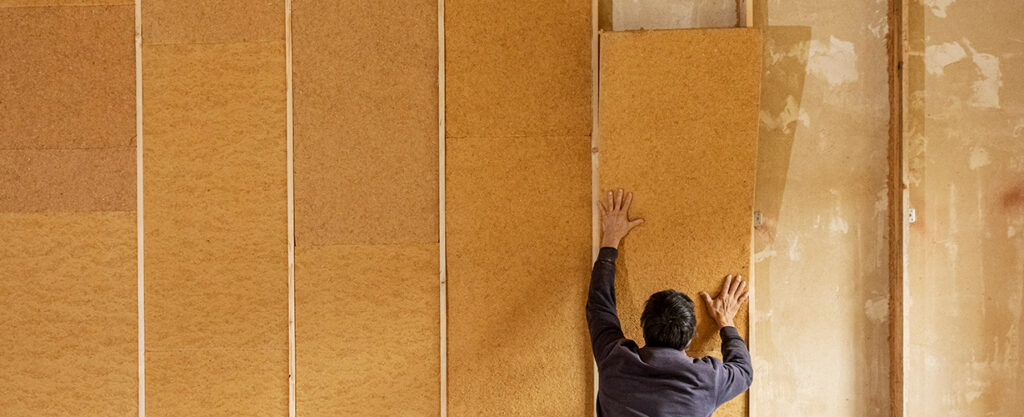
TimberBatt is designed for friction-fit installation, cuts cleanly, and doesn’t itch or produce debris.
TimberFill is a safe-to-handle, debris-free dense pack blown in and attic blanket insulation. Where installers have to wear PPE to handle fiberglass and spray foam, TimberFill doesn’t require special protective gear and won’t irritate the skin or cause itchiness.
TimberBoard installs with standard carpentry tools—no re-tooling required—and when you cut it, you get sawdust (no microplastics blowing away in the wind!)
Sustainability Benefits Without Compromise
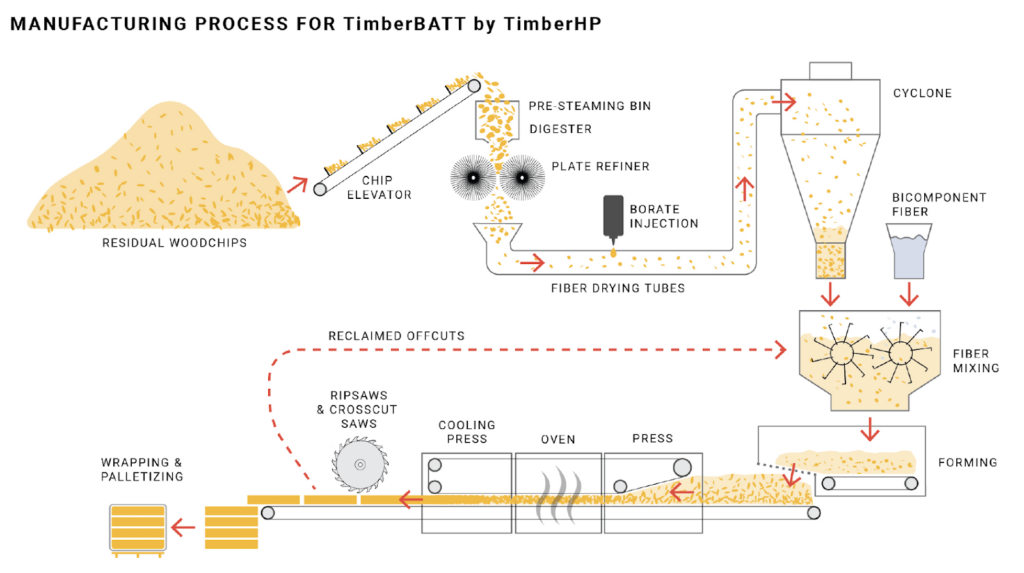
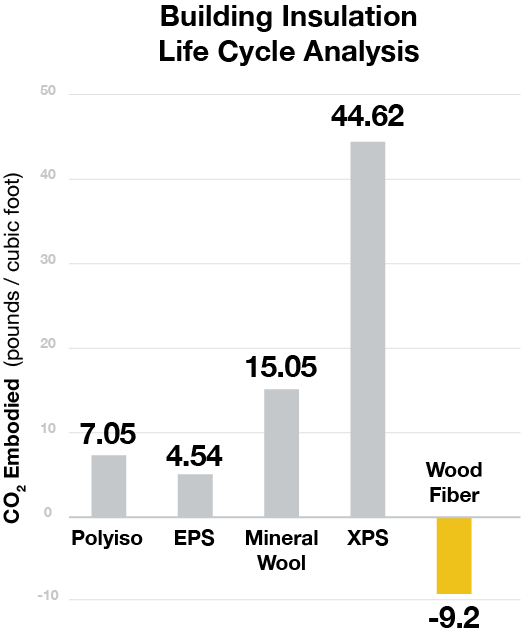
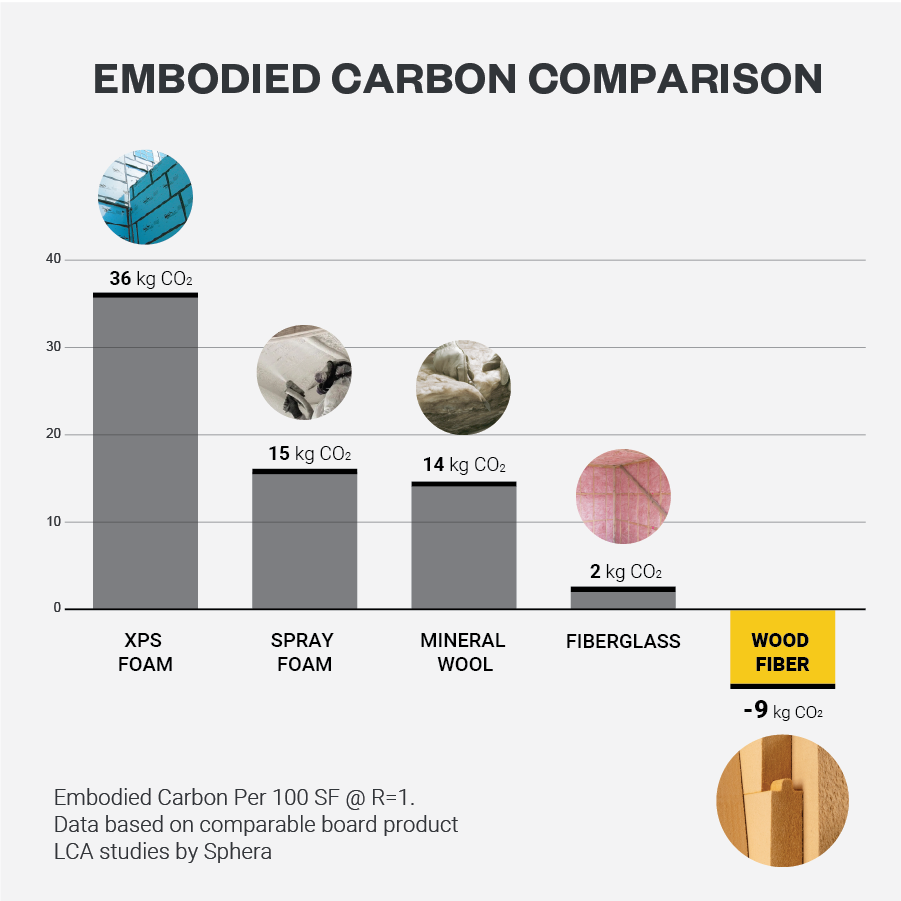
Made from residual softwood chips and manufactured in America, TimberHP products store carbon in the built environment, ultimately lowering a building’s upfront carbon footprint. It’s free from harsh fibers or off-gassing, and contributes to building longevity. A building insulation life cycle analysis shows that wood fiber drastically reduces carbon emissions compared to other materials in the manufacturing process. We recycle off cuts and out of spec material back into the process minimizing manufacturing waste.
Data based on comparable board product LCA studies by Sphera
Wood fiber insulation contributes to energy-efficient construction by delivering reduced thermal bridging, best in class resistance to short term heat gains even compared to higher R value insulations, and quiet, comfortable interiors without complicating installation or extending timelines.
Validating Real-World Performance
Because Results Speak Louder Than a Promise
Hold wood fiber insulation up against any other insulation product from spray foam to mineral wool and you’ll see some similarities (like high R values) and some differences (wood fiber is the most scalable bio based, renewable insulation on the market).
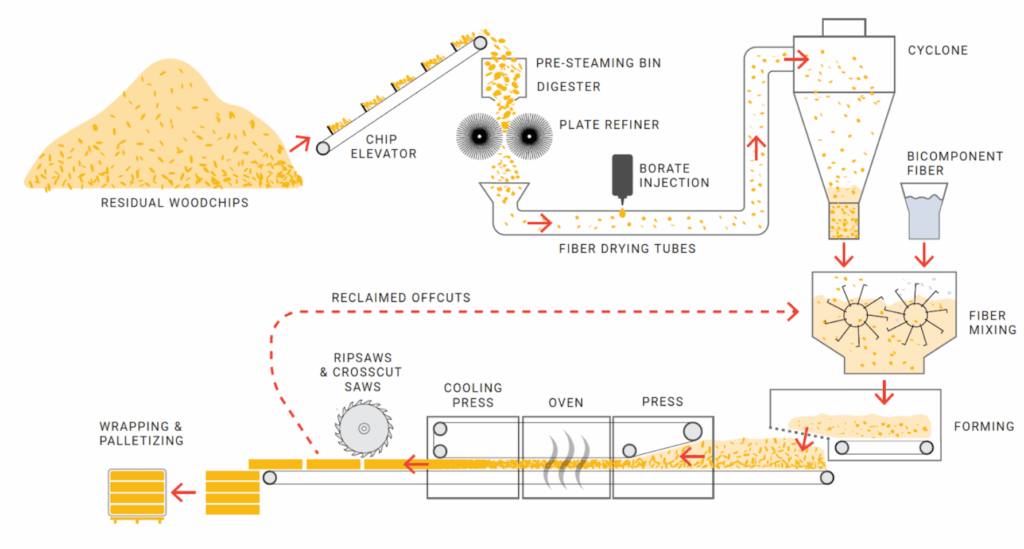
Let’s take a closer look at the manufacturing process for TimberBatt to see more clearly how we provide a high-performance insulation material with a fully renewable lifecycle.
How is it renewable? At the end of its service life, TimberBatt and TimberBoard can be removed with standard tools and handled like other wood-based building materials. Because it’s made almost entirely from wood fiber, it carries the inherent potential for recycling, reuse, or energy recovery—pathways that align with the industry’s move toward circularity. While large-scale recycling systems for wood fiber insulation are still emerging in North America, TimberHP insulation is designed with that future in mind. Choosing TimberHP means specifying a product that not only performs today but is positioned to contribute to more sustainable building practices tomorrow.
Check enough boxes and it starts to become clear that wood fiber has a distinct leg up. But the real proof, as with anything, is in real-world use. and we’ve done enough testing to accurately validate just how superior TimberHP wood fiber insulation is to other products when it comes to overall performance in the built environment.
An “I Can’t Hear Anything” Level of Acoustic Performance
TimberHP’s acoustic testing data underscores its ability to create quieter, more comfortable spaces. Assemblies using TimberBatt or TimberFill deliver STC 50–55 and NRC ratings well above 0.80, ideal for multi-unit dwellings, schools, and commercial buildings.
All TimberHP wood fiber insulation products earn top fire-performance marks (ASTM E84 Class A/B with 1- and 2-hour fire ratings) and enhance fire-resistance in assemblies; wood-stud walls see rated increases thanks to these materials. While our products are treated with borate, it is applied in a liquid form, allowing it to saturate into the wood fiber, unlike cellulose which uses a powder coating of borate. Saturation provides a superior, longer-term performance against fire, moisture, and pets.
Easy Breathing
All TimberHP wood fiber insulation products are vapor open, meaning they provide wind-tight and water-resistant performance that repels moisture without trapping humidity, reducing the potential for mold, rot, or condensation.
Everyone can breathe easier knowing the air is freer from potential allergens or irritants than in homes that use standard insulation – additionally, using wood fiber insulation removes the chance of chemicals leaching into the air from fiberglass and spray foam materials.
Comfortable Through All Seasons
TimberBatt, TimberFill, and TimberBoard all offer R values at or above the standard for residential or commercial building performance, and coupled with our insulation’s vapor-open and renewable material makeup, you can infuse your project with exceptional thermal storage, draft reduction, and temperature stabilization. Wood fiber insulation provides a superior thermal barrier for year-round comfort.
CASE STUDY
Insulating Multifamily Housing
Since 2023, Avesta has specified TimberHP products in 5 multi-building projects across Maine. In multifamily housing, acoustic comfort is critical, and wood fiber insulation delivers on that need while also providing high performance and sustainability.
Project Highlights
Maine Locations: Gray, Lewiston, Farmington, and Westbrook
Build Type: Multifamily housing units
Specs: 2 – 3-story wood frame construction
Sizes: 21,000 to 60,000 square feet
TimberHP Products: TimberFill for exterior walls, and TimberBatt for interior walls
Why TimberHP Was the Right Fit
TimberHP products allowed Avesta Housing and project partners to meet important goals for each multifamily housing unit:
TimberFill:
High R value exterior wall insulation
Effective sound dampening—especially important for multifamily builds
No use of spray foams or insulations with harmful chemicals
Cost effective with easy installation and high performance
Easy to visually inspect to verify density and coverage, ensuring long-term performance
TimberBatt:
High R value interior wall insulation
Effective sound dampening—especially important for apartments near mechanical components like elevators
Cost effective with easy installation and high performance
Integrating Wood Fiber Insulation Into Your Next Project
The Total Package for Specifiers and Installers
Adopting wood fiber insulation for your next project is just smart. It’s cost-competitive with mineral wool but is made from renewable materials. It is sourced and manufactured in the U.S. from our plant in Madison, Maine, but has its origins in Europe as a trusted insulation material.
Now, let’s break down how wood fiber insulation can help you succeed and elevate your next project:
Easy to spec our code-compliant, triple-rated (thermal, acoustic, fire) solutions.
Meet sustainability goals with renewable, non-toxic insulation that supports certifications and health.
Achieve design ambitions while also attaining durable insulation performance
Products ready to fit into standard assemblies—no custom adjustments.
Quieter, safer, and cleaner handling conditions than traditional insulation.
Reliable, long-term performance that aids energy efficiency and occupant satisfaction—without adding complexity.
If you’re contemplating which type of insulation material to use for your next project, let us make the decision easier. Wood fiber insulation is quickly becoming a go-to in the building and construction industry, and from price to performance, it delivers.
See how TimberHP helped Avesta Housing solve common challenges in multifamily living spaces and create quiet, healthy, high-performing housing.
What is Wood Fiber Insulation, and Why Haven’t You Heard of It?
When it comes to insulation, you’ll often hear two schools of thought: 1. “Just give me something that works.” 2. “If I can improve performance or sustainability, I want to know about it.” If you’re in the second group, chances are you’ve already looked beyond fiberglass or spray foam—so we’d like to introduce you to […]
When it comes to insulation, you’ll often hear two schools of thought:
1. “Just give me something that works.”
2. “If I can improve performance or sustainability, I want to know about it.”
If you’re in the second group, chances are you’ve already looked beyond fiberglass or spray foam—so we’d like to introduce you to wood fiber insulation (if you haven’t already met).
Wood fiber insulation has been a trusted material in Europe for more than two decades—used in everything from high-performance Passive House construction to historic retrofits. Now, for the first time, it’s being manufactured in the U.S. by TimberHP in Maine—bringing this proven material to North American builders and designers.
Since it’s newer on the scene in North America, let’s break down exactly what wood fiber insulation is: how it’s made, why it’s different, and why you should consider it for your next project.
A Smarter Use of Residual Wood Chips: How Wood Fiber Insulation Is Made
At its core, wood fiber insulation is exactly what it sounds like: insulation made from wood fibers. But it’s not just any wood. Lumberyards produce softwood chips during the process of milling round logs into square boards. These wood chips are then delivered to our refurbished paper mill in Madison, Maine, where the chips are refined and pressed into different insulation products:
TimberBoard: a dense, rigid board for exterior continuous insulation
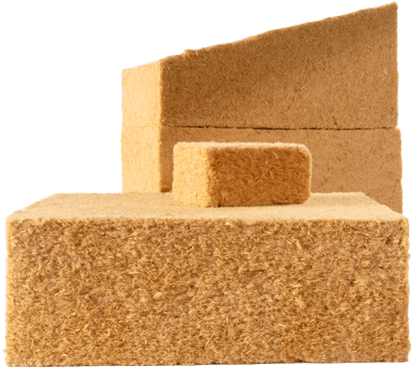
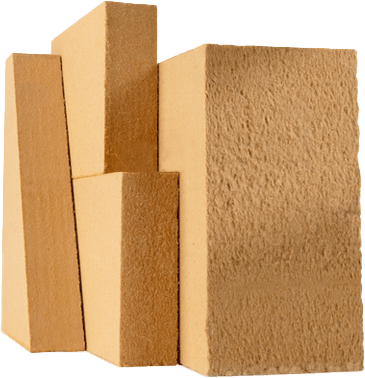
TimberBatt: a semi-rigid batt for framed cavity applications
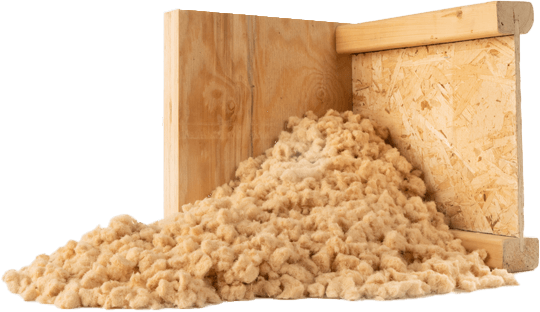
TimberFill: a loose fill or dense pack for attics and walls
These products are manufactured using a clean, efficient, eco-friendly process, so wood fiber insulation products remain sustainable from the source. .
Proven Performance—Naturally
Wood fiber insulation isn’t just an environmentally responsible choice. It also offers a number of features that make it an exceptional solution for a range of building applications:
Effective Fire Resistance
Despite being made from wood, TimberHP insulation products are made to resist fire. TimberBatt and TimberFill both carry a Class A fire rating thanks to treatment with borate—a naturally occurring mineral that provides effective fire resistance without relying on harmful flame retardants. It offers powerful protection without the toxicity.
Superior Acoustic Comfort
TimberHP’s wood fiber insulation doesn’t just dampen sound—it outperforms in acoustic performance due to its high density and fibrous structure. Our insulation solutions often match or exceed mineral wool in common wall assemblies—and it all adds up to quieter, more comfortable indoor spaces, especially in multifamily and mixed-use buildings.
Year-Round Thermal Performance
Wood fiber has a superior heat storage capacity compared to conventional insulation; in addition to providing a stable R-value for reducing heating loads in winter, it also outperforms conventional insulation at keeping interiors cool in summer—ultimately improving year-round energy efficiency.
Vapor Open, Moisture Smart
TimberHP’s vapor-open profile helps avoid the moisture issues commonly associated with foam insulation products. Wood fiber allows water vapor to pass through rather than trapping it, helping prevent mold, condensation, and rot, and promoting improved indoor air quality and a longer-lasting building envelope.
Why You Haven’t Heard of Wood Fiber Insulation—Yet
Wood fiber insulation is a mainstay in Europe, where it has been used in high-performance and Passive House buildings for more than two decades. Strict energy efficiency standards and sustainability goals in countries like Germany, Austria, and Switzerland accelerated innovation and adoption of wood fiber materials long before the U.S. caught on.
So why now?
The U.S. is seeing a shift in the building design and construction industries. Architects, builders, and homeowners are demanding products that reduce carbon impact, improve occupant health, and deliver better performance over the life of the building. TimberHP’s wood fiber insulation checks every box—with the added bonuses of being sustainably sourced and manufactured in the U.S.
A Modern Material with Deep Roots
Wood fiber insulation is a smart, sustainable, and high-performing alternative to traditional insulation materials. It makes use of renewable forest resources that would otherwise go to waste, is manufactured with a clean process in a revitalized local facility, and offers a range of benefits that improve the comfort, durability, and health of indoor spaces.
Those who specify, install, or sell wood fiber insulation can feel good about their impact on the built environment and the environment at large. If you hadn’t heard of wood fiber insulation, you have now, and this once-overlooked material is poised to change our thinking around and choices for insulation in North America.
Curious how wood fiber insulation compares to what you’re currently using? Subscribe to our newsletter for regular updates about our wood fiber insulation products and to see how they stack up against fiberglass, foam, and mineral wool.
Press Release: TimberHP Exits Chapter 11 with Strengthened Balance Sheet, Roadmap for Long-Term Financial Stability and Growth
For Immediate Release June 25, 2025 TimberHP Exits Chapter 11 with Strengthened Balance Sheet, Roadmap for Long-Term Financial Stability and Growth Company emerges with $21 million in new working capital; Cianbro remobilized on-site in Madison for completion of TimberBoard manufacturing line. Madison, Maine – TimberHP, the sole manufacturer of wood fiber insulation in North America, […]
For Immediate Release
June 25, 2025
TimberHP Exits Chapter 11 with Strengthened Balance Sheet, Roadmap for Long-Term Financial Stability and Growth
Company emerges with $21 million in new working capital; Cianbro remobilized on-site in Madison for completion of TimberBoard manufacturing line.
Madison, Maine – TimberHP, the sole manufacturer of wood fiber insulation in North America, announced today its successful emergence, uncontested, from Chapter 11, allowing the recapitalized company to operate from a position of strength as it executes its strategy for long-term growth.
Exiting reorganization, the company has officially reincorporated as TimberHP, Inc. and has retired the previous corporate name, GO Lab, Inc.
The change of legal name symbolizes an exciting fresh start for the company, with a strategy that calls for rapid execution across key areas of TimberHP operations.
In Madison, Cianbro Corporation, the general contractor at the mill, has remobilized on-site and is nearing completion and operation of the manufacturing line for the company’s third product, TimberBoard. TimberHP expects to have certified TimberBoard available for sale by the end of the year.
“We are very grateful for the broad support that we have received from creditors, financial partners, the Finance Authority of Maine and other lenders, which has enabled us to successfully complete our restructuring with an exciting opportunity for growth moving forward,” said Matthew O’Malia, TimberHP CEO. “Our team demonstrated incredible commitment and resilience through this transition period, and our improved liquidity and balance sheet provide the chance to execute on our plan to make TimberFill, TimberBatt and TimberBoard mainstream insulations of choice for residential, light commercial, and multifamily development projects.”
Sales of TimberFill and TimberBatt, which continued uninterrupted during the Chapter 11 court process, are projected to grow substantially post-exit, as TimberHP ramps up production with recently improved products, and the company uses its improved financial position to implement its marketing plan and build out its sales force across the Northeast and Mid-Atlantic regions.
Customers interested in purchasing TimberHP wood fiber insulation can search for retailers on our website by clicking here.
Contact:
Jay Field Waldo Station Partners 847-630-6918 Jay.Field@waldostation.com
A New Chapter: TimberHP Emerges Stronger and Restarts TimberBoard Production
The TimberHP team is proud to announce that our company has officially and successfully emerged from Chapter 11 restructuring – and we have done so from a position of renewed strength and momentum. As the sole manufacturer of wood fiber insulation in North America, we are committed to making TimberBoard, TimberBatt, and TimberFill the go-to […]
The TimberHP team is proud to announce that our company has officially and successfully emerged from Chapter 11 restructuring – and we have done so from a position of renewed strength and momentum.
As the sole manufacturer of wood fiber insulation in North America, we are committed to making TimberBoard, TimberBatt, and TimberFill the go-to insulation solutions for residential, light commercial, and multifamily building projects. This next chapter begins with a clear mission for our business: to accelerate growth, ramp up production, and continue to deliver on our promise of providing wood fiber insulation that is high-performance and healthy for the planet and for people.
A Stronger Foundation: What Our Chapter 11 Emergence Means
Our emergence from Chapter 11 is uncontested and complete. With a recapitalized structure, we now have the financial foundation and operational capacity to meet rising demand, improve product availability, and support a growing network of distributors, builders, architects, and installers who are helping make important changes toward healthier, more sustainable building practices.
There are a number of key initiatives and product developments taking place as we move our business forward:
TimberBoard Production is Back on Track
Many of our customers have been patiently waiting for our third product, TimberBoard, to become available, and we are happy to report that our general contractor Cianbro Corporation has remobilized at our manufacturing mill in Madison and is nearing completion of the TimberBoard production line. We expect to bring certified TimberBoard to market by the end of the year – a major milestone for our company and for builders looking for a robust, climate-positive rigid insulation alternative.
Uninterrupted Then, and Accelerating Now
Even during restructuring, TimberFill and TimberBatt production and sales continued without pause. With this new chapter, we’re increasing output of both products to meet growing demand, and doing so with improved formulations that reflect our ongoing investment in high performance, safety, and environmental responsibility.
For TimberHP customers, our products will be easier to find, specify, and install as we are actively building out our sales team across the Northeast and Mid-Atlantic and executing a refreshed marketing strategy focused on improved communication and support.
We’re Just Getting Started
A heartfelt thank you goes out to our financial partners, customers, and community, whose respective support was integral in getting us where we are today. We are also so grateful for the resilience and dedication of our employees, who helped power us through this transition.
It’s time to move forward and deliver the future of wood fiber insulation for high-performance, sustainable, and safe building construction, and we’re thrilled to have you on this journey with us.
FAQs: TimberHP’s Chapter 11 Emergence & What It Means for Our Customers
Hide All | Show All
What happened during TimberHP’s Chapter 11 process?
TimberHP entered Chapter 11 in March of 2025 to restructure the company and secure additional funding. During this time, the company continued manufacturing and fulfilling all orders. As of June 2025, TimberHP has successfully exited reorganization, fully funded, and operating as TimberHP, Inc.
Is TimberHP still in business?
Yes! TimberHP has officially and successfully emerged from Chapter 11 and is operating with a strengthened financial foundation. We are growing, hiring, expanding production, and moving full speed ahead.
Can I still purchase TimberFill and TimberBatt?
Absolutely. Sales and production of TimberFill and TimberBatt continued uninterrupted during the Chapter 11 process and are ramping up post-restructuring. You can find a retailer near you here.
When will TimberBoard be available?
Production of TimberBoard is restarting, and a certified product is expected to be available for sale by the end of 2025. We’ll share updates as we get closer to launch.
Has the quality of TimberHP products changed?
Yes – in a good way. As part of our growth strategy, we’ve made product improvements to enhance performance and consistency. TimberFill and TimberBatt are better than ever.
Will my current TimberHP rep or sales contact change?
Our team is growing, and you may see some new faces as we expand across the Northeast and Mid-Atlantic. However, our commitment to personalized, knowledgeable support remains the same. Reach out here with any questions or to connect with a rep.
Are there changes to TimberHP’s ownership or leadership?
TimberHP is now backed by its former bondholders, who have invested an additional $21 million to ensure long-term success. The core leadership, mission, and product vision remain unchanged, with renewed strength and a clear growth path ahead.
What does the emergence from Chapter 11 mean for the building community?
It means confidence. TimberHP is now operating from a more stable, well-capitalized position and scaling up production to meet project demand. You can specify our products knowing they are backed by a resilient, growth-focused company.
What if I’m a homeowner interested in using TimberHP products?
You can check our retailer locator to see where TimberFill or TimberBatt are available near you, or talk to your builder or architect about specifying TimberHP wood fiber insulation in your project.
To provide the best experiences, we use technologies like cookies to store and/or access device information.
Functional Always active
The technical storage or access is strictly necessary for the legitimate purpose of enabling the use of a specific service explicitly requested by the subscriber or user, or for the sole purpose of carrying out the transmission of a communication over an electronic communications network.
Preferences
The technical storage or access is necessary for the legitimate purpose of storing preferences that are not requested by the subscriber or user.
Statistics
The technical storage or access that is used exclusively for statistical purposes.The technical storage or access that is used exclusively for anonymous statistical purposes. Without a subpoena, voluntary compliance on the part of your Internet Service Provider, or additional records from a third party, information stored or retrieved for this purpose alone cannot usually be used to identify you.
Marketing
The technical storage or access is required to create user profiles to send advertising, or to track the user on a website or across several websites for similar marketing purposes.